Rosslare Proximity Card Replacement: Compatible 26-Bit Cards
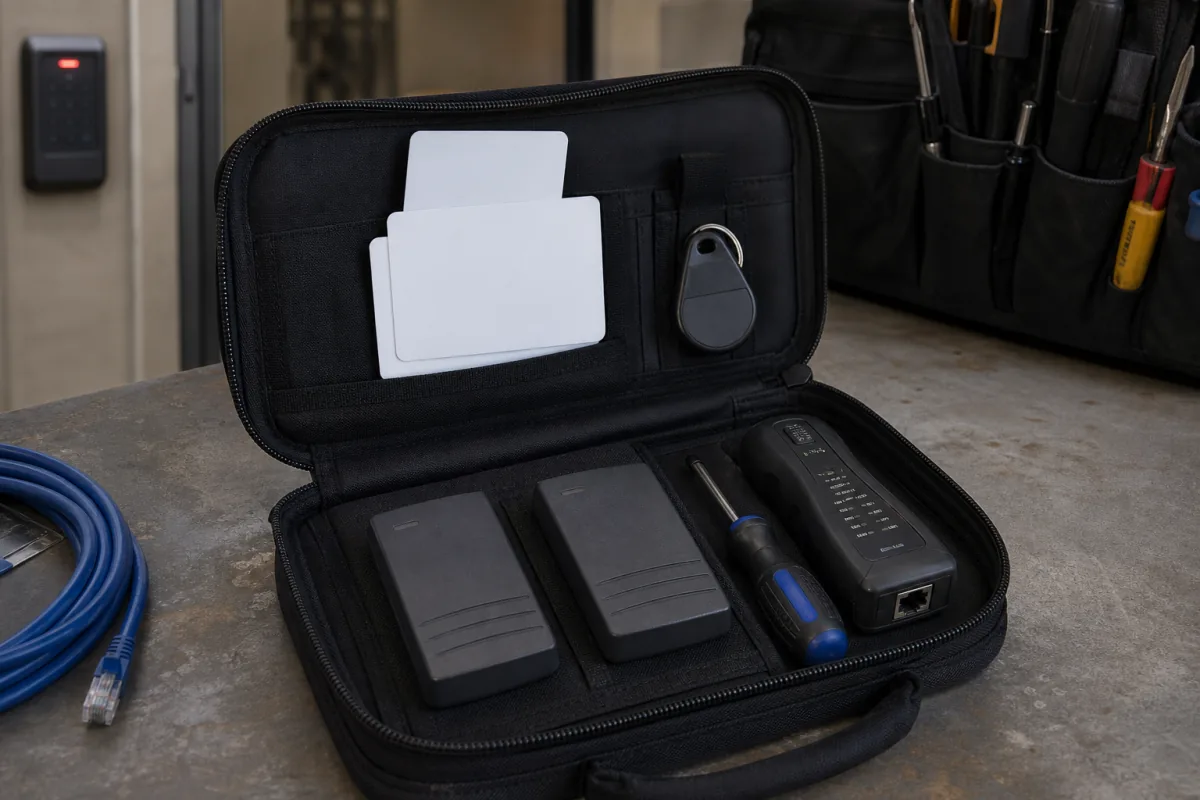
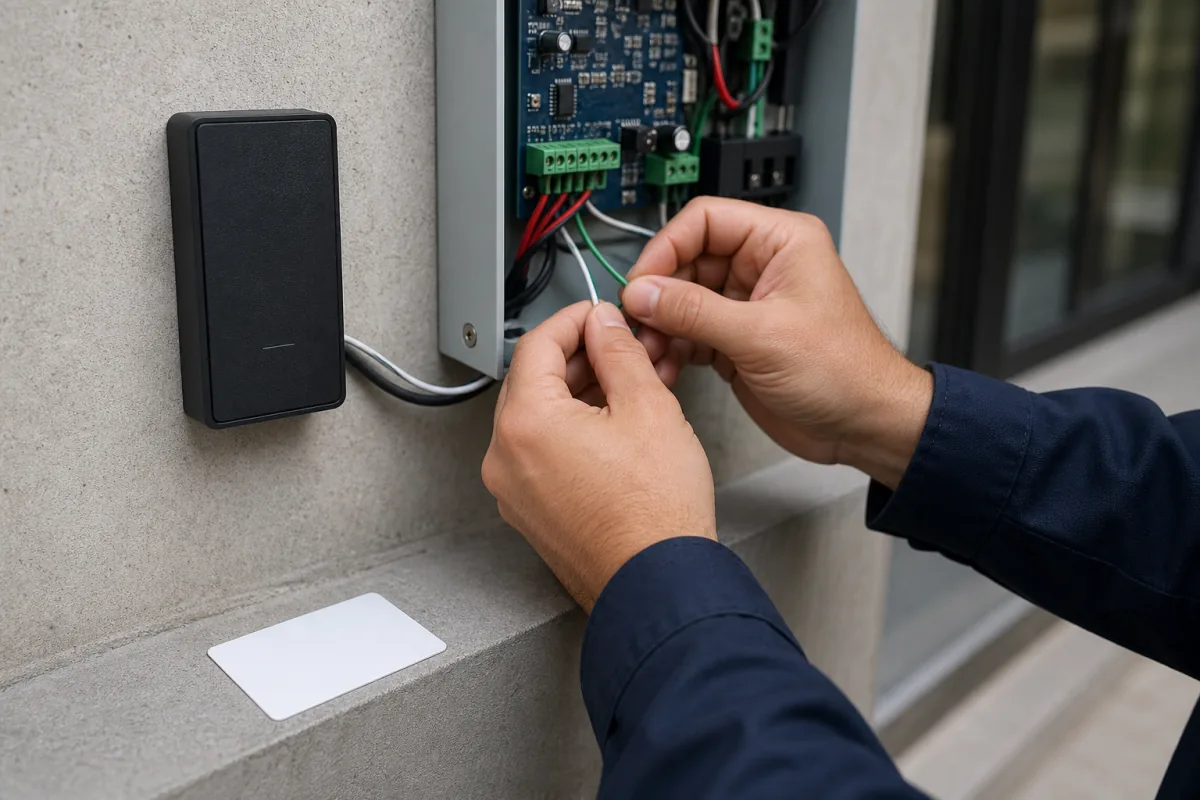
Rosslare ACS proximity cards use the standard 26-bit Wiegand format (H10301) at 125 kHz — the same open credential standard found across most of the access control industry. If your building runs Rosslare readers such as the D19 or L12C, a compatible aftermarket card from American Key Cards will work without any reader configuration changes. The catch most buyers run into is that searching for “Rosslare proximity card replacement” turns up almost nothing except the OEM dealer channel. This guide covers what actually works in a Rosslare reader, the OEM part numbers to match, and how to reorder without a dealer account.
What Is a Rosslare Proximity Card?
Rosslare Security Products is a global access control manufacturer headquartered in Israel, with significant installations across the Middle East, Europe, and North America. Their proximity credential line — including the AT-ERS-26A-3001 ISO card, the AT-ERC clamshell card, and the AT-ERK-26A-7TB0 key fob — operates at 125 kHz using a standard EM4100-class chip.
The Wiegand output to the access panel is standard 26-bit H10301: a facility code field (0–255) and a card number field (0–65,535). There is no proprietary air-interface encoding between the Rosslare card and reader — unlike AWID-format readers, which use a distinct air interface that prevents HID cards from working. A Rosslare reader accepts any compatible 26-bit EM-class or standard prox credential.
This makes Rosslare one of the most supplier-flexible card formats in the industry — the OEM simply is not the only option.
How to Identify a Rosslare Proximity Reader
Rosslare readers are typically marked with the Rosslare logo and a model number starting with a D-, L-, or AY- prefix. Common reader models include:
- Rosslare D19 — indoor PIN and proximity reader, 125 kHz EM4100-class
- Rosslare L12C — outdoor proximity reader, IP65-rated, 125 kHz
- Rosslare AY-series — Wiegand 26-bit compatible readers on ACS access controllers
If you are not sure of the reader model, check the back of the reader housing or the original installation paperwork. Your Rosslare ACS panel documentation will also list which credentials the system was installed with.
Rosslare OEM Part Numbers and Their Equivalents
| OEM Part Number | Form Factor | Format | AKC Compatible Option |
|---|---|---|---|
AT-ERS-26A-3001 | ISO card (printable) | 26-bit H10301 | AKC Rosslare-Compatible Proximity Card |
AT-ERC | Clamshell card | 26-bit H10301 | AKC Rosslare-Compatible Proximity Card |
AT-ERK-26A-7TB0 | Key fob | 26-bit H10301 | AKC Rosslare-Compatible Proximity Key Fob |
AT-R14C | Proximity card | 26-bit H10301 | AKC Rosslare-Compatible Proximity Card |
AT-R271BL | Proximity card | 26-bit H10301 | AKC Rosslare-Compatible Proximity Card |
American Key Cards is not affiliated with Rosslare Security Products. Our cards are compatible by specification — same frequency, same chip class, same 26-bit Wiegand output — not manufactured or endorsed by the OEM.
Can Rosslare Proximity Cards Be Cloned?
Yes, with an important distinction between cloning and legitimate replacement.
Rosslare proximity credentials use standard 125 kHz EM-class RFID with no cryptographic protection. The facility code and card number stored on each card are readable with commercially available RFID tools and can be reproduced on a blank T5577 writable tag.
Ordering compatible replacement cards from American Key Cards is a different process entirely. You provide your facility code and the card number or range you need, and we program each card to those exact values from scratch. No existing card needs to be scanned. This is the same approach any access control installer or credential supplier uses.
Rosslare also offers a goPROX smart credential line at 13.56 MHz for installations requiring stronger protection. Those smart credentials use a different chip and cannot be cloned or supplied by third-party aftermarket vendors. This guide covers the standard 125 kHz proximity line only.
Which Rosslare Readers Accept Compatible Cards
Rosslare proximity readers accept any standard 26-bit Wiegand EM-class credential. The AKC compatible card works in the following reader families:
- Rosslare D19 PIN and proximity reader (125 kHz EM)
- Rosslare L12C outdoor proximity reader (125 kHz, IP65-rated)
- Rosslare AY-series access readers (Wiegand 26-bit)
- Any reader accepting standard EM4100-class or 26-bit Wiegand credentials
If your Rosslare system also uses HID-compatible readers on any doors, standard 26-bit cards work equally well in those readers.
How Rosslare Fits the Wider 26-Bit Ecosystem
Rosslare proximity sits firmly within the open 26-bit Wiegand ecosystem. Unlike formats such as Kantech ioProx (XSF-encoded) or Indala FlexPass (PSK-modulated), there is no proprietary encoding layer between the Rosslare card and reader. The credential simply needs to match on frequency (125 kHz) and output format (26-bit H10301).
This means:
- Rosslare readers can accept compatible aftermarket cards without firmware changes
- Cards programmed to your facility code are drop-in replacements for OEM credentials
- If you ever upgrade to a different reader brand that also accepts 26-bit Wiegand, the same cards will work
For reference, Continental Access CardAccess 3000 systems and AWID 26-bit readers also use Wiegand 26-bit output but have different air-interface behaviors — it is worth knowing which format your specific readers require before ordering from any supplier, including us.
Why Rosslare Replacement Cards Are Hard to Find
Rosslare distributes credentials primarily through its installer and dealer network. The OEM part numbers are available through authorized Rosslare distributors, but minimum order quantities and dealer registration requirements make it cumbersome for property managers, facility administrators, and individual building owners to reorder a small batch of replacement cards.
At the same time, almost no aftermarket supplier publishes a page specifically for Rosslare proximity cards — even though the format is completely standard and any supplier capable of encoding 26-bit H10301 cards can fulfill the order.
The result: a buyer searching “Rosslare proximity card replacement” finds OEM distributor pages, dead ends, or completely unrelated results. American Key Cards programs Rosslare-compatible cards and fobs to order, shipped without dealer registration and without OEM minimums.
What Information You Need Before Ordering
To place a Rosslare proximity card or fob order, you need two pieces of information:
- Facility code — a number from 0 to 255 assigned when your system was installed. It is typically printed on your existing card label (often listed as FC or Site Code), visible in your Rosslare ACS software, or available from the original installer’s records.
- Card number or range — the individual card numbers you want on the new credentials. If replacing specific lost cards, use the numbers from those cards. If adding new users, select numbers that are not already enrolled in your system.
If you have working cards on hand, the facility code and card number are usually printed directly on the card. Our guide to finding your facility code covers every place it can hide. If you have lost all credentials and cannot locate the installer records, contact us — we can advise on how to retrieve this information from your Rosslare ACS panel.
Who Orders Rosslare-Compatible Cards
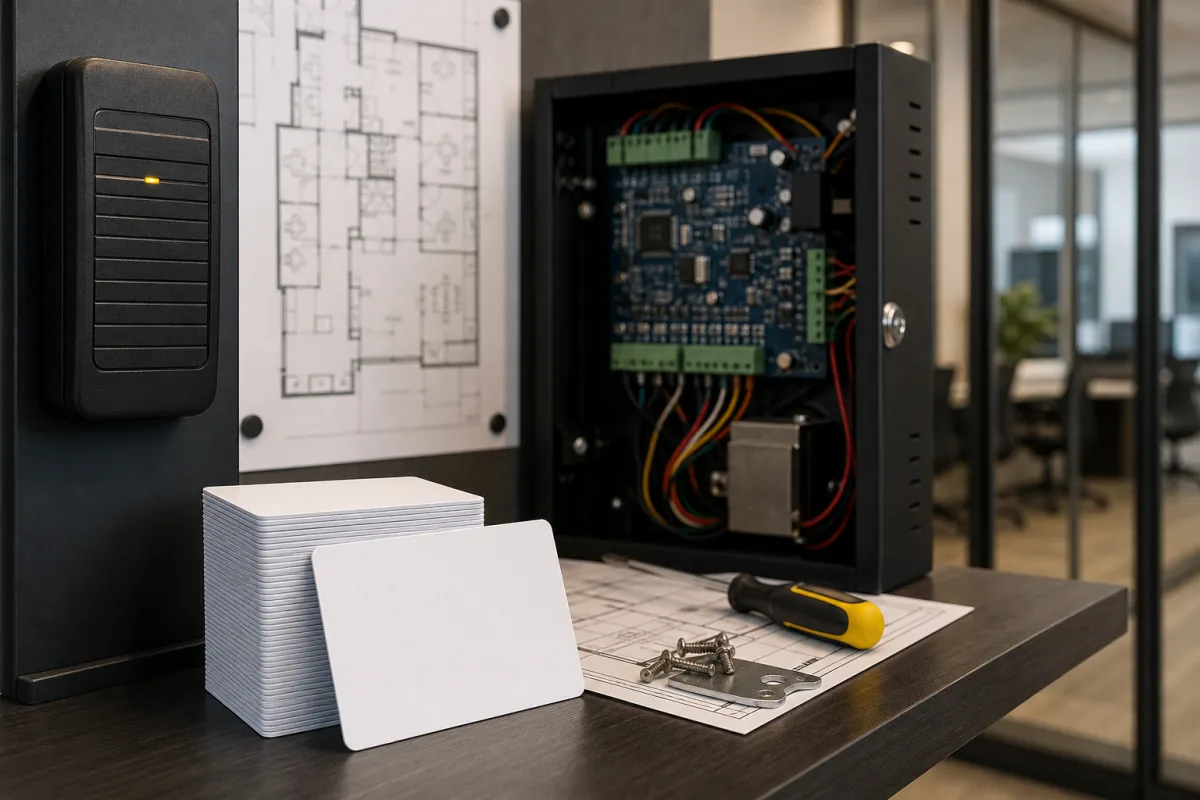
- Commercial property managers running small-to-mid office buildings on Rosslare ACS panels, replacing cards for new tenants or lost credentials
- Residential and multi-tenant buildings using Rosslare D19 or L12C readers at entry points
- International installations — Rosslare has a strong presence in the Middle East and Europe, and we ship internationally
- Security integrators maintaining Rosslare-equipped sites who need a direct-buy credential source for reorders
How to Order From American Key Cards
The ordering process is straightforward. Contact us with your facility code, the card number range you need, the form factor you want (ISO card or clamshell for wallet carry, key fob for keyring carry), and the quantity. We program each card to your specification and ship. There is no dealer account required and no minimum order tied to OEM purchasing agreements.
Compatible aftermarket cards cost meaningfully less than OEM pricing for the same reason any non-OEM part costs less: you are paying for the specification and the programming, not the brand on the card. The reader does not distinguish between an OEM AT-ERS-26A-3001 and an AKC-compatible card encoding the same facility code and card number — it reads the 26-bit Wiegand data and either grants or denies access based on what is enrolled in your panel.
For a complete technical breakdown of the Rosslare proximity format, visit the Rosslare Proximity format page.
If you are ready to order, or if you have questions about identifying your facility code or confirming compatibility, reach out through our contact page. We respond to most inquiries the same business day.
Frequently asked questions
What card format do Rosslare proximity readers use?
Rosslare proximity readers, including the D19 and L12C series, use standard 125 kHz RFID with 26-bit Wiegand output (H10301). This is the same open format used across most of the access control industry, which means compatible aftermarket cards from American Key Cards work directly in Rosslare readers without any reader-side configuration changes.
What OEM part numbers do Rosslare proximity cards have?
The most common Rosslare proximity credentials are the AT-ERS-26A-3001 (printable ISO card), AT-ERC (clamshell card), AT-ERK-26A-7TB0 (key fob), AT-R14C, and AT-R271BL. American Key Cards supplies compatible cards and fobs that match the same 26-bit Wiegand specification as these OEM credentials.
Can Rosslare proximity cards be cloned or duplicated?
Yes. Rosslare proximity cards use standard 125 kHz EM-class RFID with no proprietary encryption. The card data (facility code and card number) can be read and reproduced using widely available RFID tools. A compatible replacement card from American Key Cards is not a clone — it is programmed from your known facility code and card number, not copied from an existing card.
What information do I need to order replacement Rosslare cards?
You need your facility code (0-255) and the card number or range you want assigned. Both should be in your Rosslare ACS software or your original installer's records. If you have existing working cards, the facility code and card number are typically printed on the card label. Contact us and we will walk through the ordering process with you.