HID Part Numbers Decoded: 1326 vs 1336 vs 1346 vs 1386 vs 1431
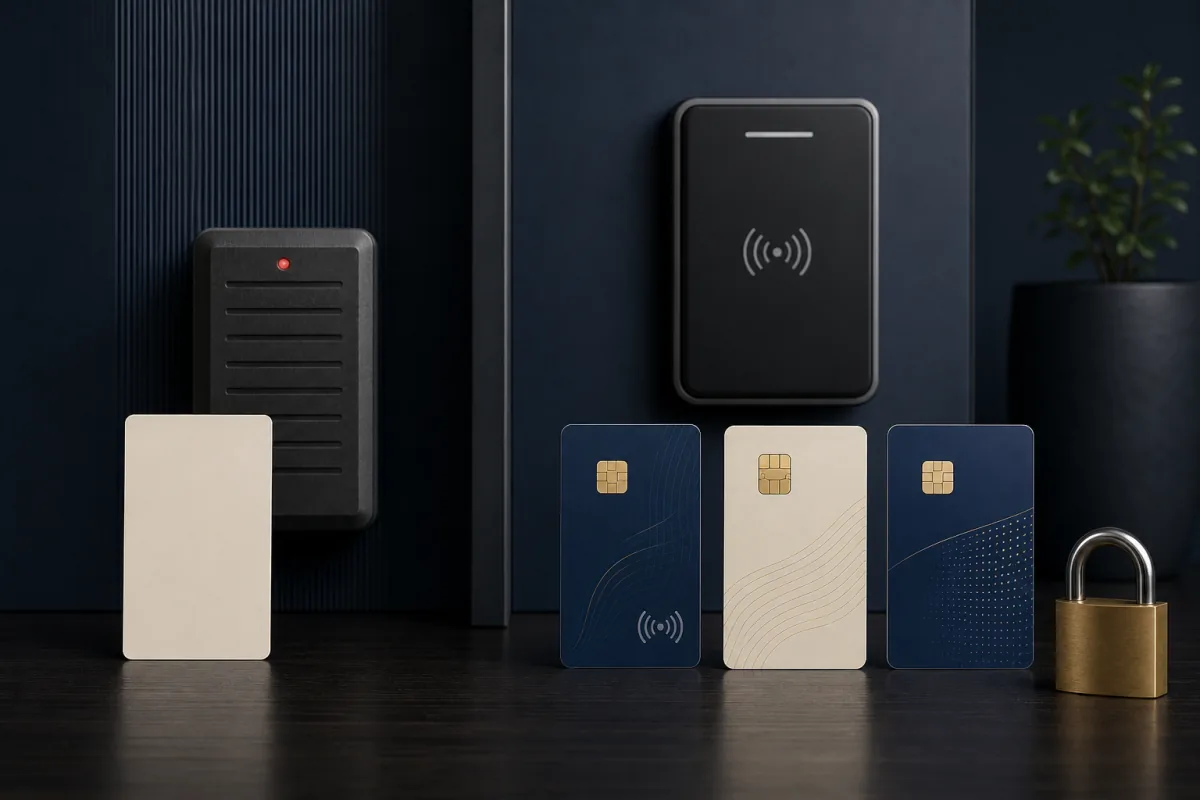
Every HID credential order starts with a four-digit number, and most reorder mistakes trace back to misreading it. The number does not describe security level or format — it describes the body and the technology inside it. A 1326 and a 1386 can carry the exact same 26-bit data and still be the wrong purchase, because one is a thick clamshell and the other is a printable photo-ID card. This guide decodes the part numbers we are asked about most, and links each one to the compatible replacement we supply — programmed to your facility code, with no dealer account. American Key Cards is not affiliated with HID Global; we supply compatible credentials by specification.
The Quick Decoder Table
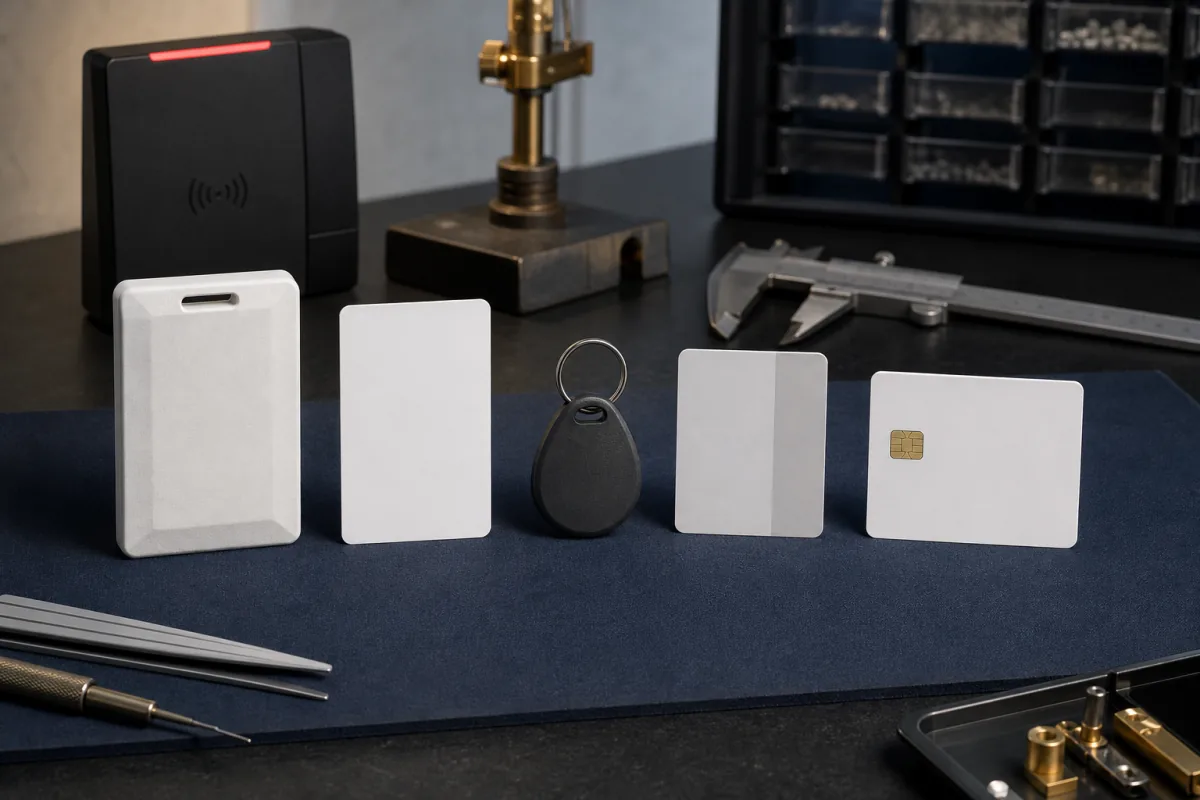
| Part number | Name | Body | Technology | Printable? | Compatible replacement |
|---|---|---|---|---|---|
1326 | ProxCard II | Thick clamshell | 125 kHz prox | No | 1326-compatible clamshell |
1336 | DuoProx II | ISO card + magstripe | 125 kHz prox + HiCo stripe | Yes | 1336-compatible prox + magstripe |
1346 | ProxKey III | Keyring fob | 125 kHz prox | No | 1346-compatible fob |
1386 | ISOProx II | Thin ISO card | 125 kHz prox | Yes | 1386-compatible ISO card |
1431 / 1441 | FlexSmart | ISO card | 13.56 MHz MIFARE (1441 adds prox) | Yes | FlexSmart-compatible MIFARE |
All of the 125 kHz models in this table typically ship programmed in 26-bit H10301, though 37-bit and Corporate 1000 configurations exist across the range. The body changes; the data does not have to.
1326 ProxCard II — the Clamshell Workhorse
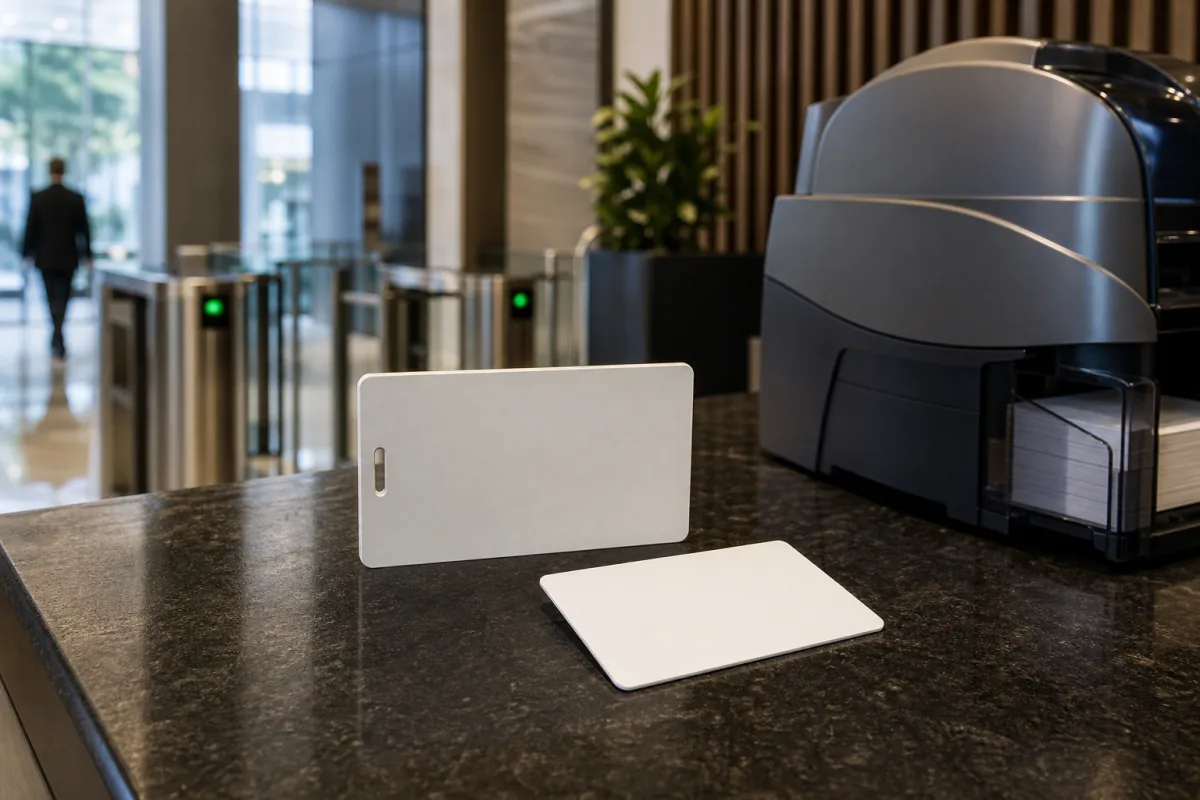
The 1326 is the card most people picture when they hear “prox card”: a rigid, roughly 1.9 mm clamshell with the antenna sealed inside a hard shell. It survives warehouses, tool belts and years on a lanyard, which is why industrial sites still standardize on it. Its one real limitation is that it will never go through a card printer — the shell is too thick for print rollers. If your team needs photo IDs, this is the wrong body; look at the 1386 instead.
Replacements need three things: format, facility code and card number range. Our 1326-compatible clamshell cards are programmed to all three before shipping, and they enroll alongside existing OEM stock without any panel changes — the reader delivers identical data either way. The broader product page for this family is our HID Prox-compatible cards & fobs.
1336 DuoProx II — Prox Plus Magnetic Stripe
The 1336 answers a specific situation: doors read prox, but something else in the building still swipes — dining, time clocks, lockers, an old POS. Rather than issuing two cards, the DuoProx II laminates a 125 kHz prox inlay and a HiCo magnetic stripe into one printable ISO body. Campuses and gyms are its natural habitat.
Ordering it means specifying two encodings: the prox side (format, facility code, numbering — exactly as for any HID Prox card) and the stripe side (which track, what data, and whether it mirrors the printed number). Suppliers who only stock plain prox cards routinely miss the second half, which is why our 1336-compatible prox + magstripe cards are quoted with the track specification confirmed up front. Neither technology is encrypted — treat the DuoProx as a convenience combination, not a security feature.
1346 ProxKey III — the Keyring Fob
Same 125 kHz HID Prox technology as the cards, shrunk into a teardrop fob that lives on a keyring. Residential buildings, small offices and gyms favor it because tenants lose wallets less often than they lose badges — or the reverse; either way, it is a second form factor for the same system. Format rules are identical to the cards: our 1346-compatible fobs are programmed to your facility code and range, and a fob and a card in the same format coexist happily in one panel.
1386 ISOProx II — the Printable Photo-ID Card
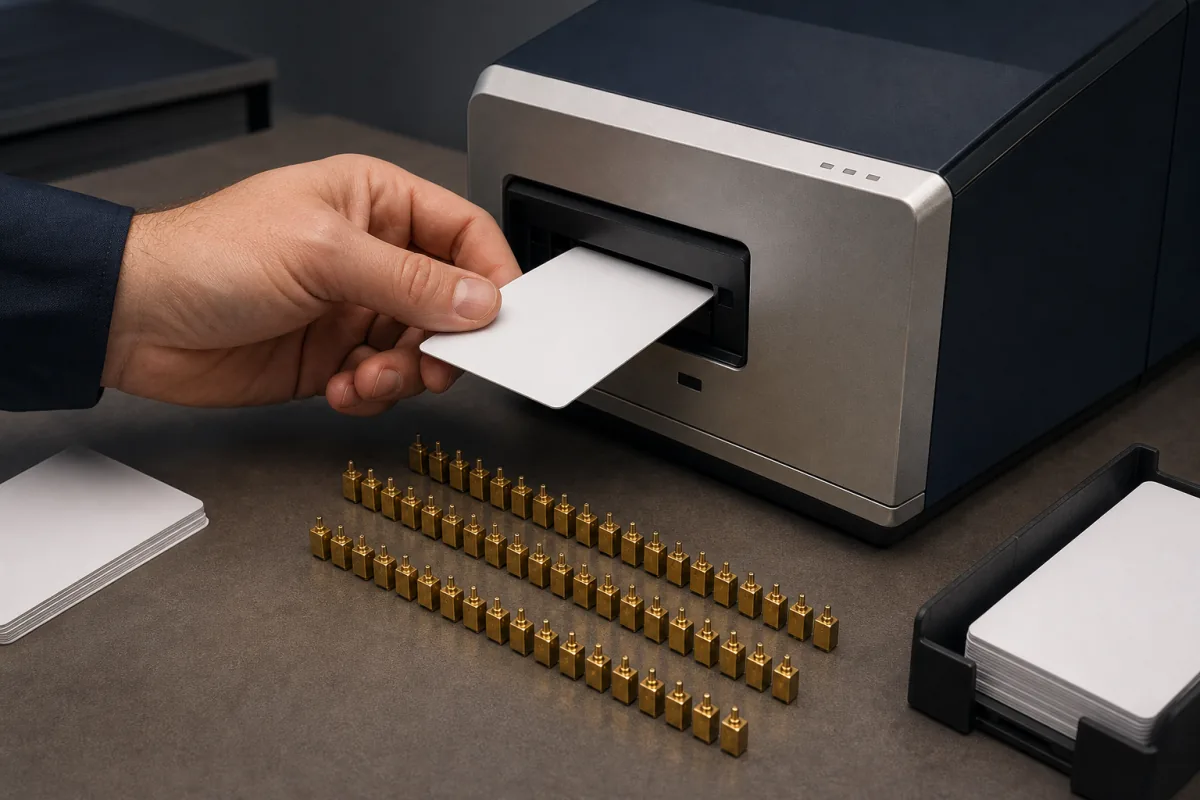
The 1386 is the 1326’s thin sibling: a standard 30 mil ISO card that feeds through dye-sublimation printers, which makes it the default for any badge program that prints names and photos. It gives up some of the clamshell’s brute durability in exchange, and laminated or composite variants exist for retransfer printing.
This is the most reordered HID card body in US offices, and the most common part number we replace. Our 1386-compatible ISO cards are matched to your format and facility code; if you are unsure whether your stock is 26-bit or something longer, a photo of an existing card’s engraving usually settles it, and our Format Finder can identify it from the part number alone.
1431 and 1441 FlexSmart — the MIFARE Line
The FlexSmart numbers mark a technology change, not just a body change: these are 13.56 MHz MIFARE Classic smart cards, not 125 kHz prox. The 1431 is MIFARE-only; the 1441 is the migration card, carrying the MIFARE chip and a separate 125 kHz HID Prox antenna so one badge opens doors on both an old prox system and a new smart-card system during a transition.
Compatibility depends on how your readers use the chip. Many installations read only the MIFARE serial number, where compatible stock is routine; sector-programmed deployments need a closer look, and MIFARE Classic’s aging cipher means new secure deployments should be specifying DESFire EV3 instead. Our FlexSmart-compatible MIFARE cards page covers both variants, and we verify the read mode from a working credential before quoting.
What the Number Does Not Tell You
Two things the part number never reveals, and both matter more than the model:
Your format and facility code. A 1386 in 26-bit H10301 with facility code 42 and a 1386 in Corporate 1000 are the same part number and completely incompatible orders. The format data lives in the programming, not the body. This is why every order we take is confirmed against a working card, an engraving photo, or installer records.
Whether your system is actually one of these at all. Encrypted HID lines — iCLASS SE, Elite, Seos — use different part numbers and different physics, and no third party can reproduce them. If your cards say iCLASS, start at our iCLASS credential stock page for the honest version of what is and is not possible.
If the number on your box is not in this guide, the fastest route is the Format Finder — type the part number and it identifies the format and routes you to the right product — or send a front-and-back photo through the contact form and we will identify it for you.
Frequently asked questions
Where do I find the HID part number on my card?
On OEM stock the base model is printed on the box label and often laser-engraved on the card edge or back, embedded in a longer configuration string such as 1386LGGMN. The first four digits are the model — 1386 in that example. If you only have loose cards with no markings, the body type itself (clamshell, printable ISO, fob, magstripe) narrows the model, and a photo of front and back is usually enough for us to identify it.
Do the letters after the number (LGGMN) matter when ordering replacements?
They describe configuration — programming, gloss front, gloss back, matched numbering, no slot punch — rather than technology. For compatible replacements the technology and format matter most: your facility code, card number range, and bit format. We confirm those from a working card or your records rather than relying on the suffix string.
Are all of these part numbers cloneable or reproducible?
The 125 kHz proximity models — 1326, 1336, 1346, 1386 — carry unencrypted facility code and card number data, so compatible replacements programmed to your format are routine. The 1431/1441 FlexSmart line uses MIFARE Classic, where it depends on whether your system reads the serial number or encrypted sectors. Encrypted HID lines such as iCLASS SE, Elite and Seos cannot be reproduced by any third party, and we say so plainly.
Can I mix compatible cards with OEM HID cards in one system?
Yes. The access panel only sees the format data — facility code and card number — delivered by the reader. A compatible card programmed in the same format and facility code enrolls and behaves identically to OEM stock, and both can coexist in the same installation.