Honeywell Northern N10002 34-Bit Prox Card: Buyer's Guide
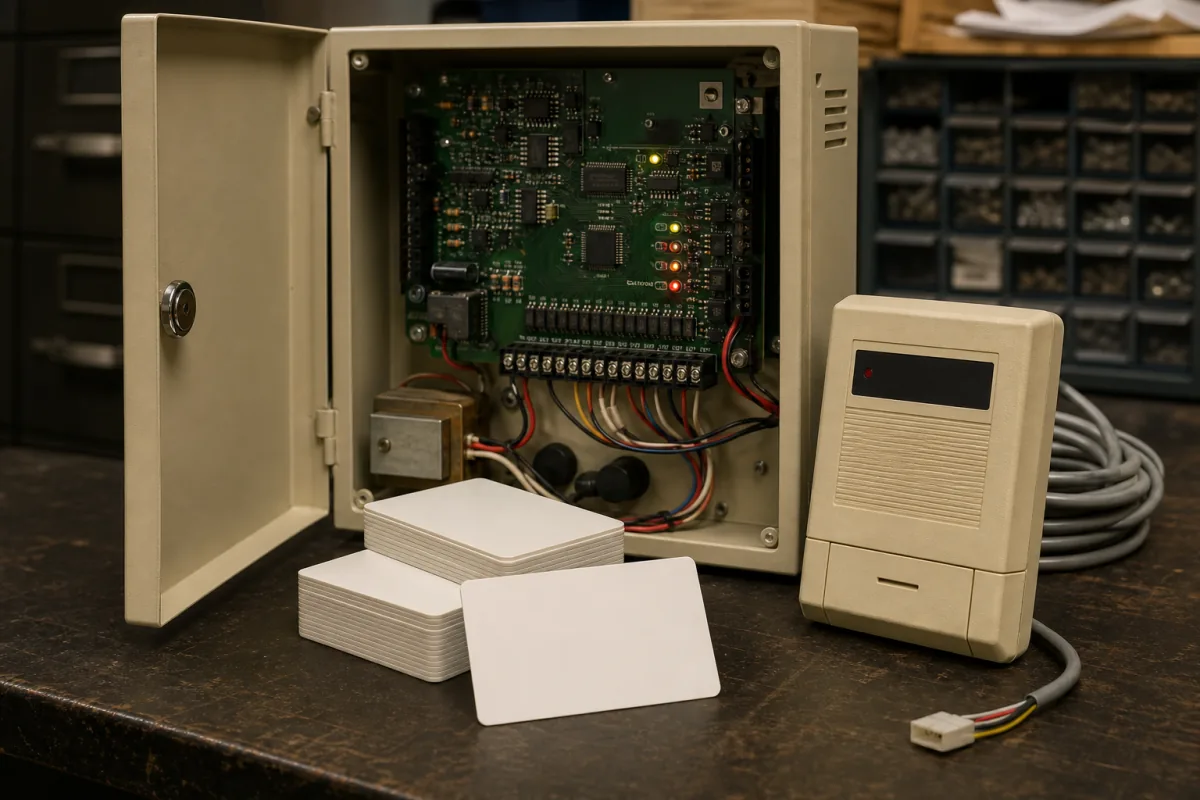
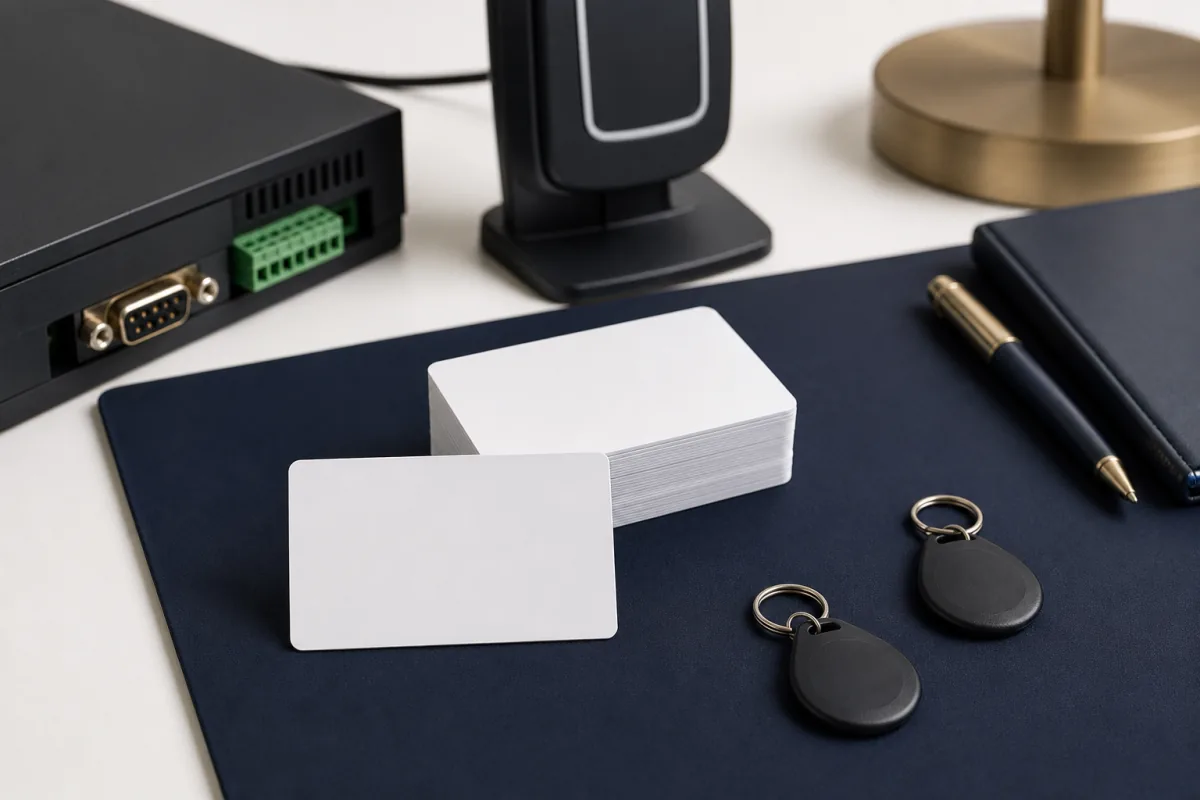
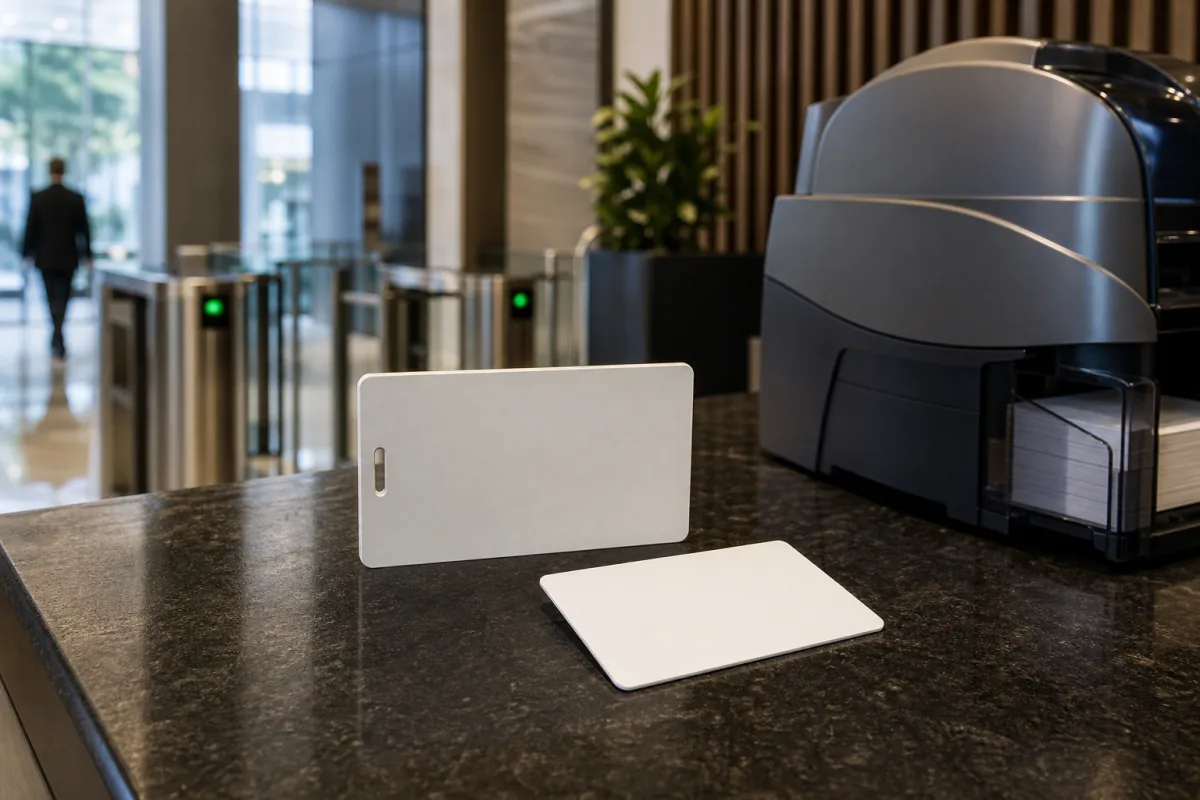
If your building uses Honeywell OmniProx readers and you need replacement access cards, you need credentials encoded in the N10002 34-bit format — not a standard HID 26-bit card. American Key Cards supplies compatible N10002 34-bit proximity cards and key fobs programmed to your facility code, available as ISO PVC or clamshell form factors, with no dealer account required.
What Is the Honeywell Northern N10002 Format?
The N10002 is a 34-bit 125 kHz proximity format developed by Northern Computers, a company acquired by Honeywell. It became the standard credential format for the Honeywell OmniProx reader family and the Honeywell Pro-Watch access control software platform, which is widely deployed across commercial office buildings, healthcare facilities, and campuses throughout the United States.
The format operates at 125 kHz — the same frequency as standard HID ProxCard credentials — but uses a different bit structure. Where the common 26-bit H10301 format provides a 1-byte facility code (0–255) and a 2-byte card number (0–65,535), the N10002 format encodes:
- Facility code: 0–65,535 (16 bits, no upper limit of 255)
- Card number: 0–65,535 (16 bits)
- Total frame: 34 bits including parity bits
The expanded facility code range means organizations with larger deployments can use higher facility code values without running into the 255-site-code ceiling that affects standard 26-bit systems.
The chip technology underlying these cards is an EM4200 / HID-compatible 125 kHz proximity IC — a standard, read-only passive transponder that draws power from the reader’s RF field and transmits its stored data. There is no battery, no active circuitry, and no cryptographic processing. You can find more detail on the full N10002 format page.
Which OEM Part Number Are You Replacing?
Honeywell and its manufacturing partners have issued N10002-format credentials under several OEM part numbers. If you have any of these on your current cards or in your system’s credential records, you are working with the N10002 34-bit format:
| OEM Part Number | Manufacturer | Form Factor |
|---|---|---|
PX4H | Honeywell / Northern | ISO PVC proximity card |
PX4H25 | Honeywell / Northern | ISO PVC card, 25-pack pricing |
PX-4-H-PW-SPEC | Honeywell / Northern | Pro-Watch specified variant |
PVC425 | Northern Computers | ISO PVC proximity card |
PVC425S | Northern Computers | ISO PVC, sequential numbering |
Identiv 4000 | Identiv | Clamshell proximity card |
Identiv 4010 | Identiv | ISO PVC proximity card |
Identiv 4020 | Identiv | Composite ISO card |
Identiv 4032 | Identiv | Composite card with magnetic stripe |
American Key Cards is not affiliated with Honeywell, Northern Computers, or Identiv. We produce compatible cards by specification — meaning our credentials use the same 34-bit N10002 encoding, the same 125 kHz frequency, and are programmed to the same facility code and card number you specify.
Which Readers Use N10002 Format?
The N10002 format is paired primarily with the Honeywell OmniProx reader series. If you have any of these readers installed, your cards must be in N10002 34-bit format (or the reader must also accept standard 26-bit, which some do):
- Honeywell OmniProx
PX4H— standard mullion/surface-mount proximity reader - Honeywell OmniProx
PX4H25— same reader, alternate ordering unit - Honeywell
PX-4-H-PW-SPEC— Pro-Watch system-specified reader - Any Wiegand reader configured for 34-bit N10002 output
Many OmniProx deployments exist within larger Honeywell Pro-Watch installations, which is an enterprise access control management platform. If your building uses Pro-Watch as the software managing access credentials, there is a high probability the physical readers at the doors are N10002 format. Pro-Watch estates frequently absorb other panels through acquisition or phased upgrades, so if you also manage RBH or Rosslare hardware, the RBH Integra32 compatible cards guide and the Rosslare proximity card replacement guide cover those credentials.
Note that some OmniProx reader models also accept standard 26-bit H10301 cards, depending on the firmware and panel configuration. If you are unsure which format your readers are currently programmed to accept, the safest approach is to identify the card format from an existing working credential before ordering replacements. The format is typically printed on the card label as “34-bit,” “N10002,” or as a part number matching the table above.
How to Identify Your Facility Code
Every N10002 card carries two pieces of data: a facility code and a card number. You need both to order compatible replacements. Here is where to find them:
- Check the card label. The facility code and card number are often printed on the face or back of existing cards, sometimes alongside a sequential number or barcode. Look for a two-number grouping, such as “FC: 112 / CN: 0047.”
- Check the Pro-Watch credential database. If your building uses Honeywell Pro-Watch, facility administrators can pull facility code and card number records from the software’s credential management section.
- Contact the original installer. The integrator who commissioned the system should have the facility code on file. This is standard documentation for any professionally installed access control system.
- Read an existing card. A Proxmark3 or compatible 125 kHz RFID reader configured to read N10002 34-bit encoding can extract the facility code and card number from a working card.
If you cannot locate your facility code, our step-by-step guide on how to find your facility code covers each method above in more detail, or contact us before ordering and we can advise on the best approach for your situation.
How N10002 34-Bit Differs from Standard HID 26-Bit
A common ordering error is purchasing standard 26-bit HID H10301 cards for an N10002 system. Both are 125 kHz proximity formats, but they are not interchangeable. The reader decodes the bit structure it expects; if the card’s encoding does not match, the reader produces no output to the panel.
| Property | Honeywell N10002 | HID H10301 (Standard 26-Bit) |
|---|---|---|
| Frequency | 125 kHz | 125 kHz |
| Bit format | 34-bit N10002 | 26-bit Wiegand |
| Facility code range | 0–65,535 | 0–255 |
| Card number range | 0–65,535 | 0–65,535 |
| Works in OmniProx PX4H | Yes | Depends on reader config |
| Works in standard HID ProxPro | No | Yes |
| Cloneable | Yes | Yes |
The facility code range is the most practically significant difference: N10002 supports up to 65,535 unique facility codes, compared to 255 for standard 26-bit. This matters for organizations managing multiple buildings or campuses within a single credential program.
For facilities where readers have been configured to accept both formats, standard 26-bit cards may also work. But if you are replacing cards for an existing N10002 installation, ordering N10002-format credentials is the correct and reliable approach. See our standard HID H10301 format guide if you are unsure whether your readers are configured for 26-bit or 34-bit.
Can N10002 Cards Be Cloned?
Yes. The N10002 34-bit format is a legacy 125 kHz proximity technology with no cryptographic protection. The facility code and card number are stored in plain text on the card’s IC and transmitted unencrypted to the reader. Any device capable of reading a 34-bit N10002 credential can extract and reproduce that data.
This is the same security posture shared by most 125 kHz proximity formats, including standard HID 26-bit, AWID 26-bit, EM4100, and the DSX D10202 33-bit format. The technology predates widespread use of cryptographic authentication in access control credentials. Honeywell’s N10002 sits in the same wider-bit family as DSX’s format, and our DSX WinDSX D10202 33-bit card guide walks through the same reasoning for that platform.
For the majority of commercial office and facility applications, this has been an acceptable tradeoff for decades, and N10002 installations continue to operate without incident. However, organizations with elevated security requirements should evaluate a migration to 13.56 MHz smart card credentials — HID iCLASS SE or MIFARE DESFire EV3, for example — which use AES-128 mutual authentication and cannot be reproduced with standard RFID copier tools. The HID iCLASS SE format, in contrast to N10002, cannot be cloned or supplied by any third party; you can read more at our HID iCLASS SE format page.
For most N10002 deployments, the practical risk mitigation is good credential management: tracking issued cards, deactivating lost credentials promptly, and using sequential card numbering to detect anomalous access attempts.
Why Compatible Cards Cost Less Than OEM
N10002 is not a locked, single-dealer format the way a managed HID code is — Honeywell’s PX4H line and Identiv’s 4000/4010/4020/4032 series both circulate through ordinary integrator accounts. That openness is exactly why the pricing is worth questioning: when a credential is freely manufacturable, the premium a buyer pays is pure channel markup, not a licensing cost, yet property managers and facility directors rarely see the underlying number.
American Key Cards programs the same 34-bit N10002 encoding in ISO PVC and clamshell bodies and sells it direct, with no integrator account and no bulk-only minimums standing between a facility and a small reorder. At the reader the result is indistinguishable: an OmniProx PX4H reader hands your panel the same facility code and card number whether the card came from Honeywell, Identiv, or AKC — it decodes the 34-bit frame, not the brand.
What to Have Ready When Ordering
Before requesting a quote or placing an order for N10002-compatible cards or key fobs, have the following information available:
- Your facility code (0–65,535)
- The starting card number and quantity you need
- Whether you need ISO PVC cards, clamshell cards, or key fobs
- Any sequential numbering or printed labeling requirements for the card face
- Whether you need the cards delivered in sequential card number order
If your facility runs both N10002 and standard 26-bit readers in a mixed installation, specify which format applies to each door or zone — we can program cards in either format to match your infrastructure.
Ready to Order?
American Key Cards supplies N10002 34-bit compatible proximity cards and key fobs programmed to your facility code and card number range, shipped ready for enrollment in your Honeywell Pro-Watch system or OmniProx reader installation. No dealer account needed, no minimum quantity barriers for standard reorders.
Contact us with your facility code, card number range, and quantity to get a quote. If you are managing a mixed-format facility, we also supply standard 26-bit HID-compatible cards and can advise on which format applies to each reader type in your building.
Frequently asked questions
What is the Honeywell Northern N10002 card format?
The N10002 is a 34-bit 125 kHz proximity format originally developed by Northern Computers, which was acquired by Honeywell. It supports facility codes and card numbers each ranging from 0 to 65,535 — a substantially larger card number space than the standard 26-bit H10301 format. It is the primary credential format for Honeywell OmniProx readers and the Pro-Watch access control platform.
Are N10002 34-bit prox cards cloneable?
Yes. The N10002 format operates at 125 kHz with no cryptographic protection. Card data — facility code and card number — is stored in plain form and can be read and reproduced using commercially available RFID tools such as a Proxmark3 or a handheld copier with T5577 blank chips. This is the same security posture as standard HID 26-bit proximity cards.
What OEM part numbers does the N10002 format cover?
The primary OEM part numbers are the Honeywell PX4H and PX4H25 proximity cards, as well as the PX-4-H-PW-SPEC variant. Identiv also manufactures N10002-compatible credentials including the Identiv 4000 clamshell, 4010 ISO PVC, 4020 composite, and 4032 composite with magnetic stripe. All use the same 34-bit N10002 encoding.
What information do I need to order N10002-compatible replacement cards?
You need your facility code (a number from 0 to 65,535) and the card number range you want programmed (also 0 to 65,535). Both values are usually printed on your existing cards or recorded in the original installer's commissioning documentation. AKC programs each card to your exact facility code and card number before shipping.