Keri Systems MIFARE Smart Card (DK4 / DC4): Buyer's Guide
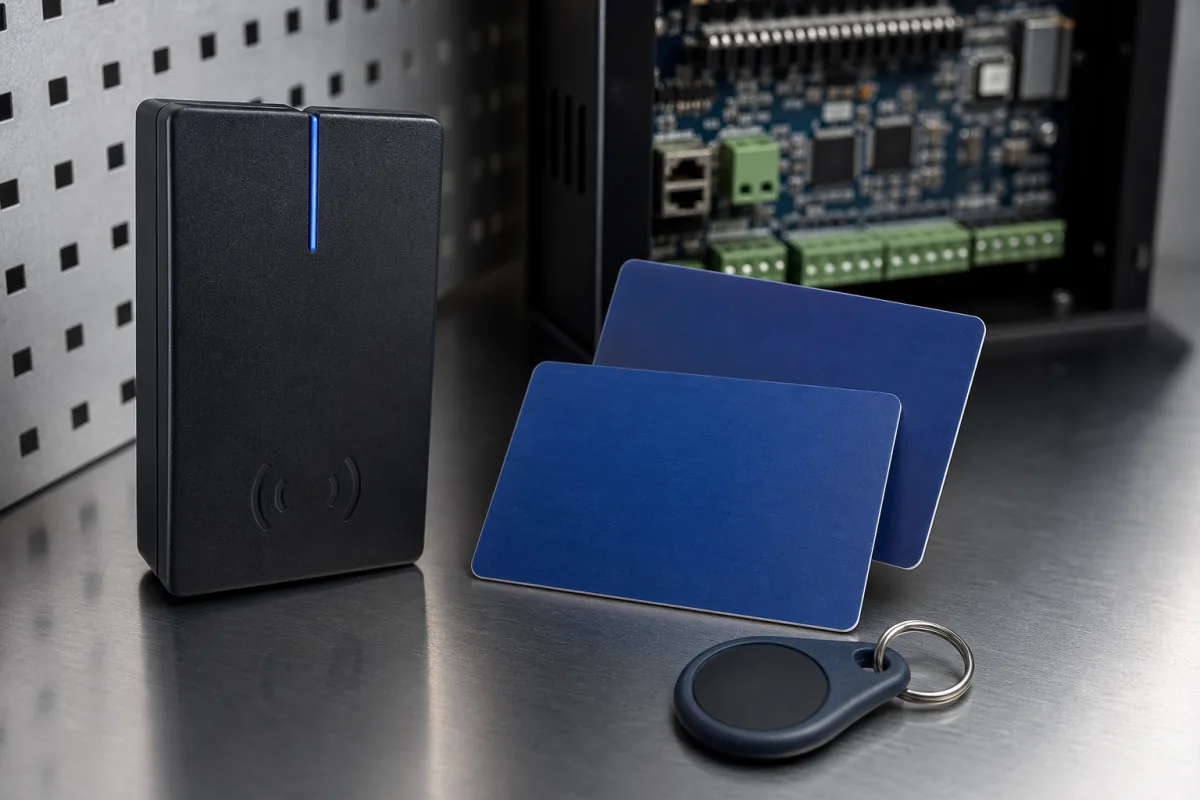
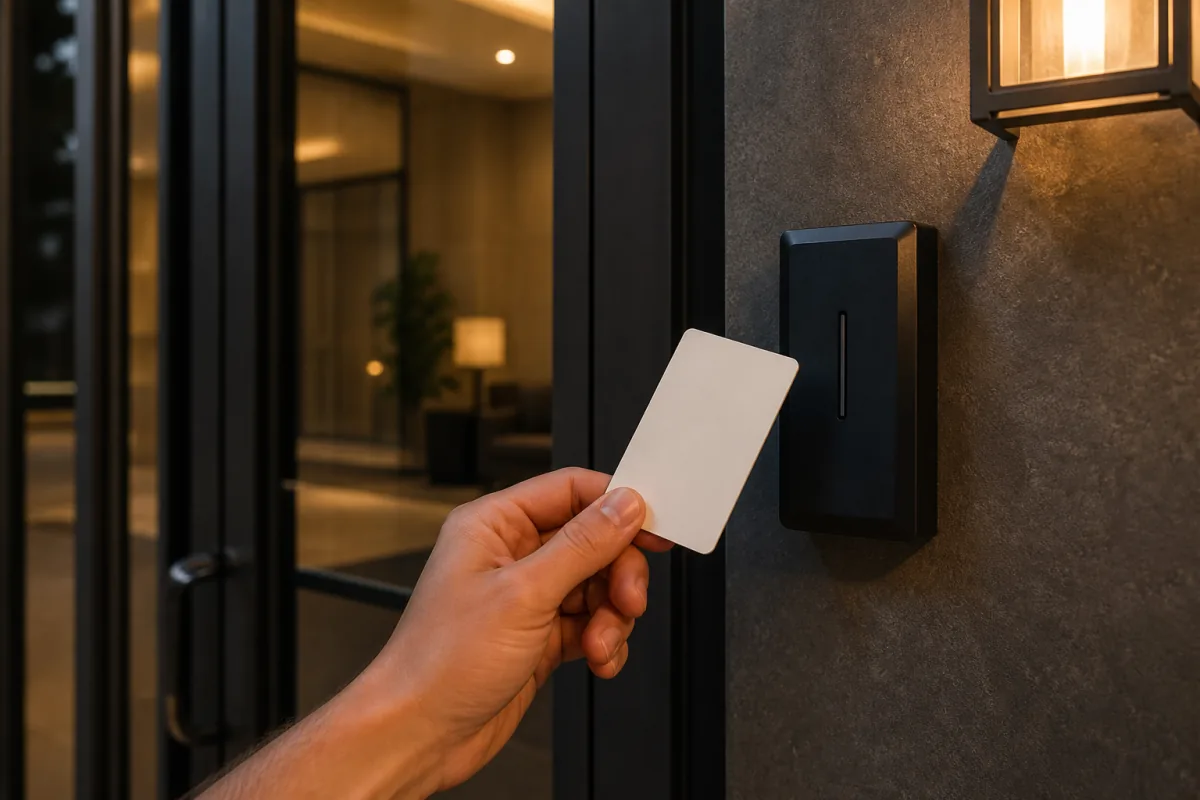
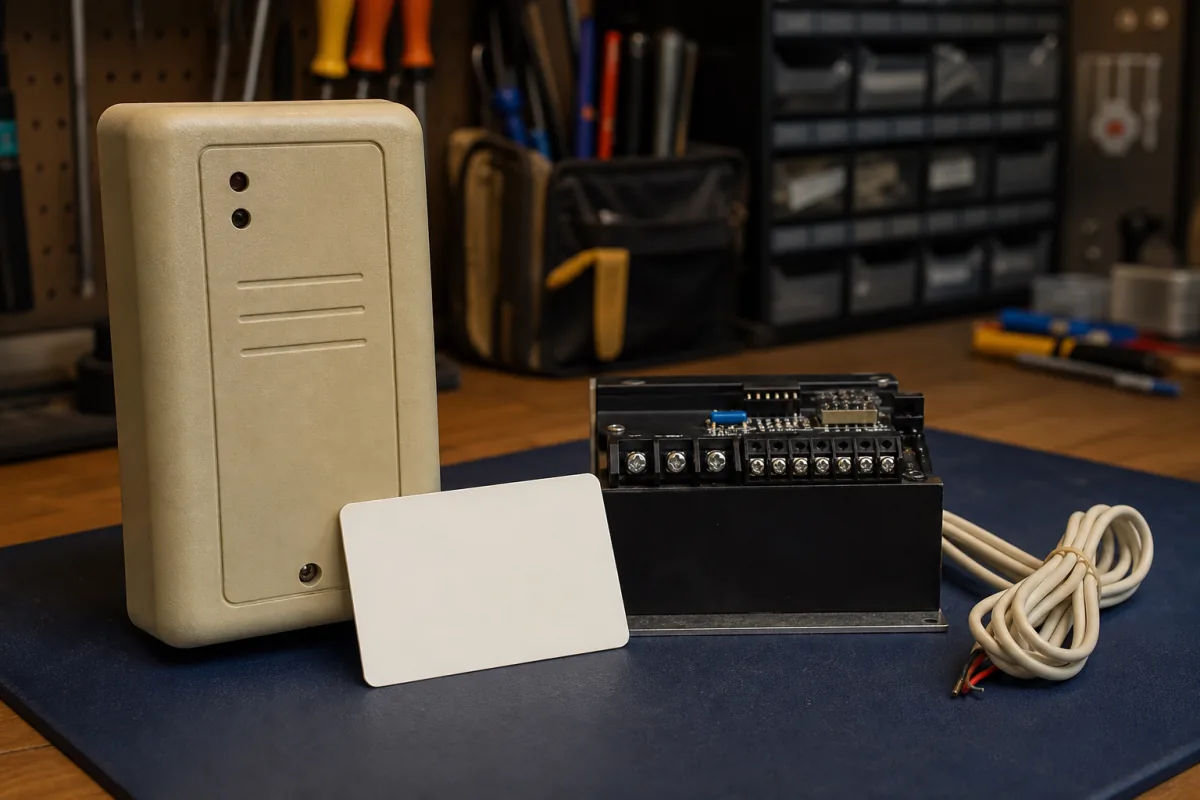
If your building runs Keri Delta-series smart card readers, a standard MIFARE card from an office supply store will not work — and neither will a generic 125 kHz proximity card. Keri MIFARE credentials (DK4-3, DC4-1) require the chip to be programmed with Keri’s proprietary application before the reader will accept them. American Key Cards is one of the few non-OEM suppliers that programs credentials to Keri’s application layout, giving you a direct-buy alternative to OEM pricing for the Keri MIFARE smart card format.
What Are Keri Systems MIFARE Smart Cards?
Keri’s MIFARE credential line operates at 13.56 MHz — a different frequency and protocol entirely from the 125 kHz proximity cards that older Keri systems use. The chip inside is the NXP MIFARE Classic 4K, a contactless smart card IC that stores data in 16 sectors of memory. Keri programs specific sectors of that memory with a proprietary application structure and custom encryption keys during manufacturing.
The result is a credential that:
- Operates at 13.56 MHz (not readable by 125 kHz prox readers)
- Carries sector-level access keys unique to Keri’s application
- Outputs Wiegand data to the access control panel after the reader authenticates the card
- Is not cloneable with commodity card duplicators available at retail
This is a meaningful security step above standard 125 kHz proximity, which carries no encryption at all. See our Keri MS format replacement guide and Keri Proximite PSC-1 buyer’s guide for context on what the older 125 kHz Keri proximity lines look like by comparison.
OEM Part Numbers and Form Factors
The Keri MIFARE credential line ships in three main OEM configurations:
| OEM Part Number | Form Factor | Pack Size | Chip |
|---|---|---|---|
DK4-3 | ISO credit-card (key fob / wristband) | Individual | NXP MIFARE Classic 4K |
DK4-3-50 | ISO credit-card (key fob) | 50-pack | NXP MIFARE Classic 4K |
DC4-1 | Clamshell card (thick housing) | Individual | NXP MIFARE Classic 4K |
All three are functionally equivalent in terms of the application programming — the difference is physical form factor and pack quantity. The Delta-series readers will authenticate any of them identically once the sector keys match.
For installations using Keri Delta readers configured for MIFARE DESFire EV2 or EV3, different credentials are required. DESFire uses AES-128 encryption rather than CRYPTO1, and is considered high-security with no publicly known practical cloning attacks as of 2026.
Which Readers Use Keri MIFARE Credentials?
Keri MIFARE smart cards are designed for the Delta-series reader family, not for Keri’s older 125 kHz reader lines. Compatible readers include:
- Keri Delta5CS — 13.56 MHz contactless smart card reader, surface-mount
- Keri DELTA6-4 — 13.56 MHz smart card reader with integrated keypad
- Multi-technology Keri readers that support 13.56 MHz alongside 125 kHz
- Any MIFARE-compatible access control reader with Wiegand output, when programmed with the correct Keri application key
If your reader model number does not include “Delta” in the name, it is likely a 125 kHz proximity reader and will not read MIFARE cards. Check your reader’s label or documentation before ordering.
How to Identify Whether Your System Uses Keri MIFARE
A few ways to confirm your format before ordering:
- Reader label — Keri Delta readers carry the model number on a sticker on the back or inside the housing. “Delta” or “DELTA” in the model name indicates a 13.56 MHz smart card reader.
- Existing card label — OEM
DK4-3andDC4-1cards typically have the Keri logo and part number printed or embossed on the back. - Your installer’s documentation — The original access control installation drawings should list reader models and credential types.
- The card itself — 13.56 MHz MIFARE cards have no printed antenna coil visible through the card body (unlike most 125 kHz clamshells, which show a visible copper coil loop when held up to light).
If you have a mix of reader types on site, the Keri NXT compatible cards guide covers a separate 125 kHz encrypted Keri format — do not confuse it with the MIFARE line.
Can Keri MIFARE Cards Be Cloned?
This is the honest answer: not with commodity tools, and not easily.
The MIFARE Classic 4K chip uses the CRYPTO1 cipher, which cryptographers have analyzed thoroughly and found vulnerabilities in. However, exploiting those vulnerabilities to clone a Keri credential requires:
- Specialized RFID research hardware (typically a Proxmark3 or similar device)
- Knowledge of or the ability to brute-force Keri’s custom sector keys
- Access to a target card for an extended read session
This is categorically different from cloning a 125 kHz proximity card, which takes seconds with a handheld copier costing under $30. Keri MIFARE cloning is not a realistic threat in typical commercial deployments.
For environments with stricter security requirements, the MIFARE DESFire EV2/EV3 option available on Keri’s Delta readers uses AES-128 encryption and is considered high-security. No practical cloning attack against DESFire EV2/EV3 is publicly known.
American Key Cards does not clone credentials. Our compatible cards are produced by programming a fresh NXP MIFARE Classic 4K chip to Keri’s application layout — the same method OEM uses, without the OEM margin.
What AKC Supplies for Keri MIFARE Systems
| Item | Description |
|---|---|
| AKC Keri MIFARE-Compatible Smart Card | ISO card, NXP MIFARE Classic 4K, programmed to Keri application layout |
| AKC Keri MIFARE-Compatible Key Fob | Key ring form factor, same chip and application programming |
Both are compatible by specification with Keri Delta-series readers. They are not affiliated with Keri Systems and are produced independently using the same chip platform and application structure.
What you need to order:
- Confirmation that your readers are Keri Delta-series (13.56 MHz)
- The card number range you want programmed (or sequential from a starting number)
- Your Wiegand output format if your system uses a non-standard bit length
We do not require a dealer account, minimum quantities above a practical floor, or any ongoing subscription. See our products page for current options, or contact us directly if your installation has specific requirements.
Why Non-OEM Keri MIFARE Cards Cost Less
Keri sells its DK4 and DC4 credentials exclusively through its authorized dealer and integrator network. That channel adds margin at every step: Keri to distributor, distributor to integrator, integrator to end customer. The underlying chip — NXP MIFARE Classic 4K — is a widely available commercial component. The programming is the technically difficult part, and it is what gives the credential its value.
American Key Cards does that programming directly, without the distribution chain. The result is the same Wiegand output, the same reader compatibility, and the same day-to-day functionality — at a price that reflects the actual cost of the credential rather than the cost of the channel.
This is the same principle that applies across compatible-by-specification access credentials: the OEM does not manufacture a magic material. They program a standard component to a specific protocol. We do the same thing.
Keri MIFARE Against the 125 kHz Formats
| Specification | Keri MIFARE (DK4 / DC4) | Keri NXT (125 kHz) | Keri MS Format |
|---|---|---|---|
| Frequency | 13.56 MHz | 125 kHz | 125 kHz |
| Chip | NXP MIFARE Classic 4K | Keri proprietary | Keri proprietary |
| Encryption | CRYPTO1 (sector keys) | Proprietary | Proprietary |
| Cloneable (commodity tools) | No | No | No |
| Compatible reader family | Delta-series | NXT readers | PXL-500 / Tiger |
| OEM part numbers | DK4-3, DC4-1 | NXT-C, NXT-K | KC-10X series |
| AKC supply | Yes | Yes | Yes |
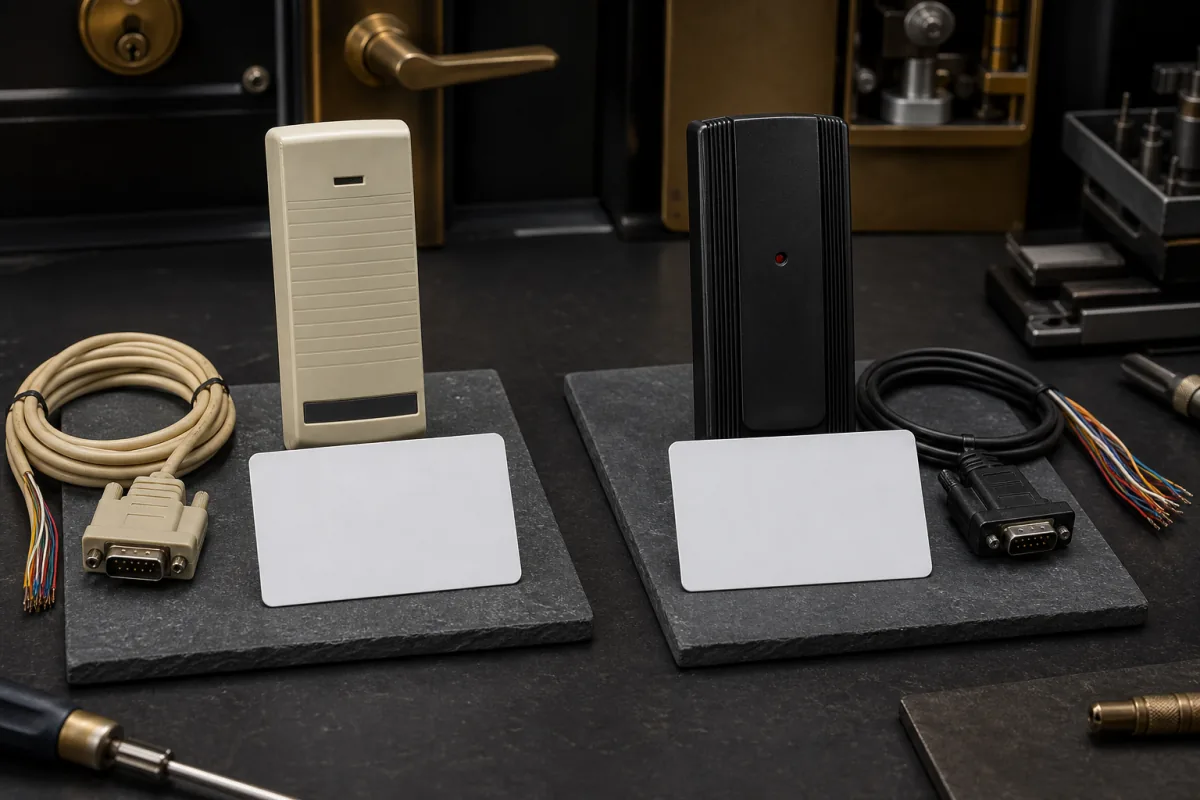
If you are not sure which Keri format your system uses, the reader model number is the fastest way to confirm. Delta-series readers take MIFARE; NXT-series readers take NXT-format 125 kHz credentials; PXL-500 Tiger readers take the older MS format. Our Keri NXT guide covers the 125 kHz encrypted side of the Keri product line in detail.
Ordering Keri MIFARE-Compatible Credentials
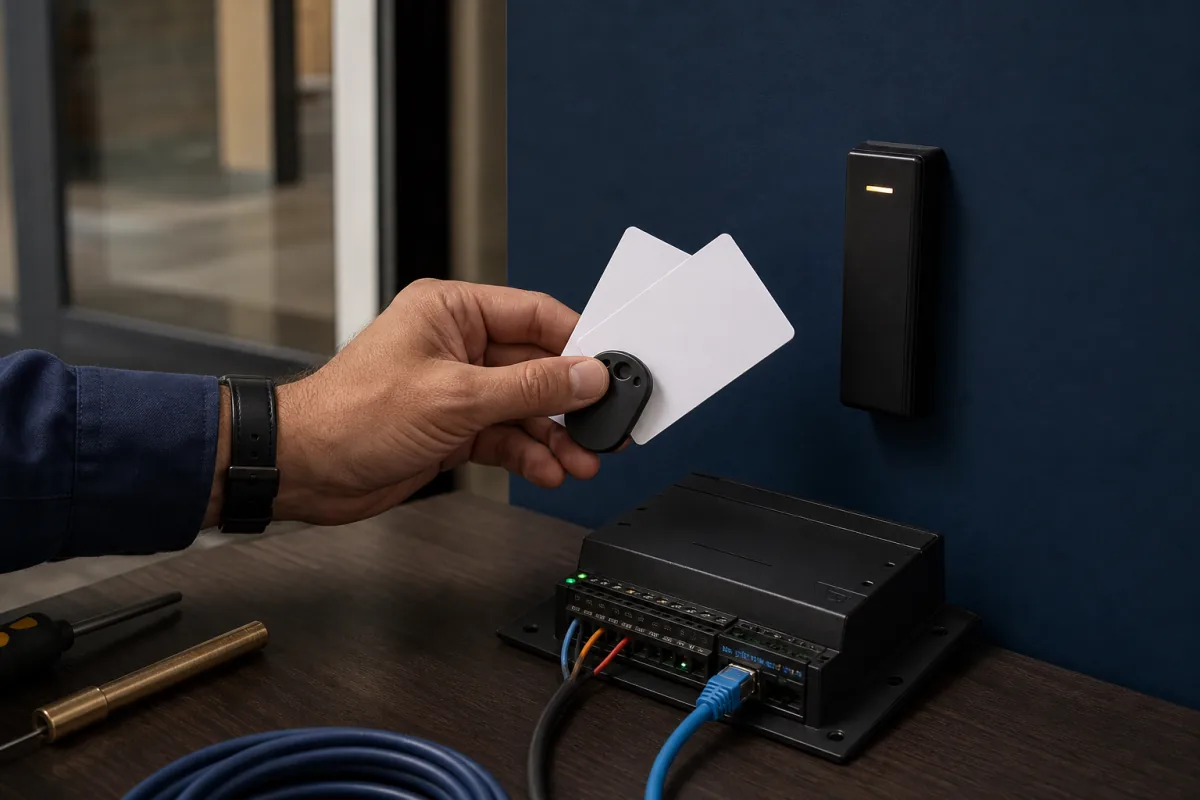
The ordering process is straightforward: confirm your reader model is Delta-series, provide the card number range you need, and specify any Wiegand output requirements for your panel. We ship programmed credentials ready to enroll in your Keri system.
For bulk orders, mixed credential types, or questions about multi-technology deployments combining 125 kHz and 13.56 MHz readers on the same system, contact American Key Cards directly. We are not affiliated with Keri Systems and carry no dealer obligation — our job is to get you the right credential at a reasonable price.
Frequently asked questions
Will a blank MIFARE Classic card work in my Keri Delta reader?
No. Keri Delta-series readers require credentials programmed with Keri's proprietary sector application and custom encryption keys. A blank NXP MIFARE Classic 4K card will not authenticate to the reader. You need credentials specifically programmed to Keri's application layout — which is what American Key Cards supplies.
What part numbers are the Keri MIFARE smart card credentials?
The primary OEM part numbers are DK4-3 (standard MIFARE card), DK4-3-50 (50-pack), and DC4-1 (clamshell card). All three use the NXP MIFARE Classic 4K chip operating at 13.56 MHz with Keri's proprietary application programming. American Key Cards supplies compatible equivalents to all three form factors.
Can Keri MIFARE credentials be cloned like 125 kHz proximity cards?
Not in the same simple way. MIFARE Classic 4K uses the CRYPTO1 cipher, which has known academic weaknesses, but cloning Keri credentials requires breaking the custom sector keys Keri programs — which is not achievable with commodity card copiers. For maximum security, Keri's Delta-series readers also support MIFARE DESFire EV2/EV3 with AES-128, which has no publicly known successful cloning attacks.
Can Keri MIFARE fobs work alongside existing 125 kHz Keri cards on the same system?
Only if you have multi-technology readers that support both 125 kHz and 13.56 MHz. Keri offers multi-technology reader models for phased transitions. If your current readers are 125 kHz only, you would need to upgrade the readers before deploying MIFARE credentials.