Keri MicroStar MS Format Card Replacement Guide
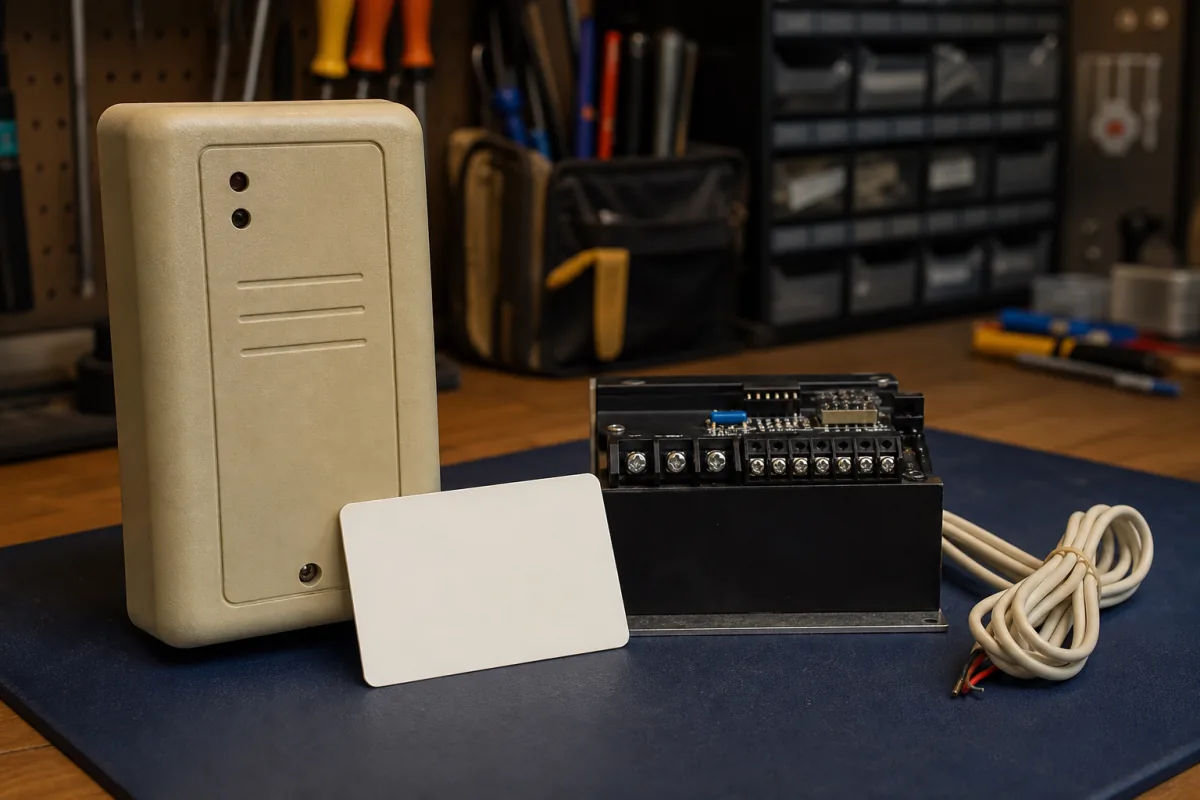
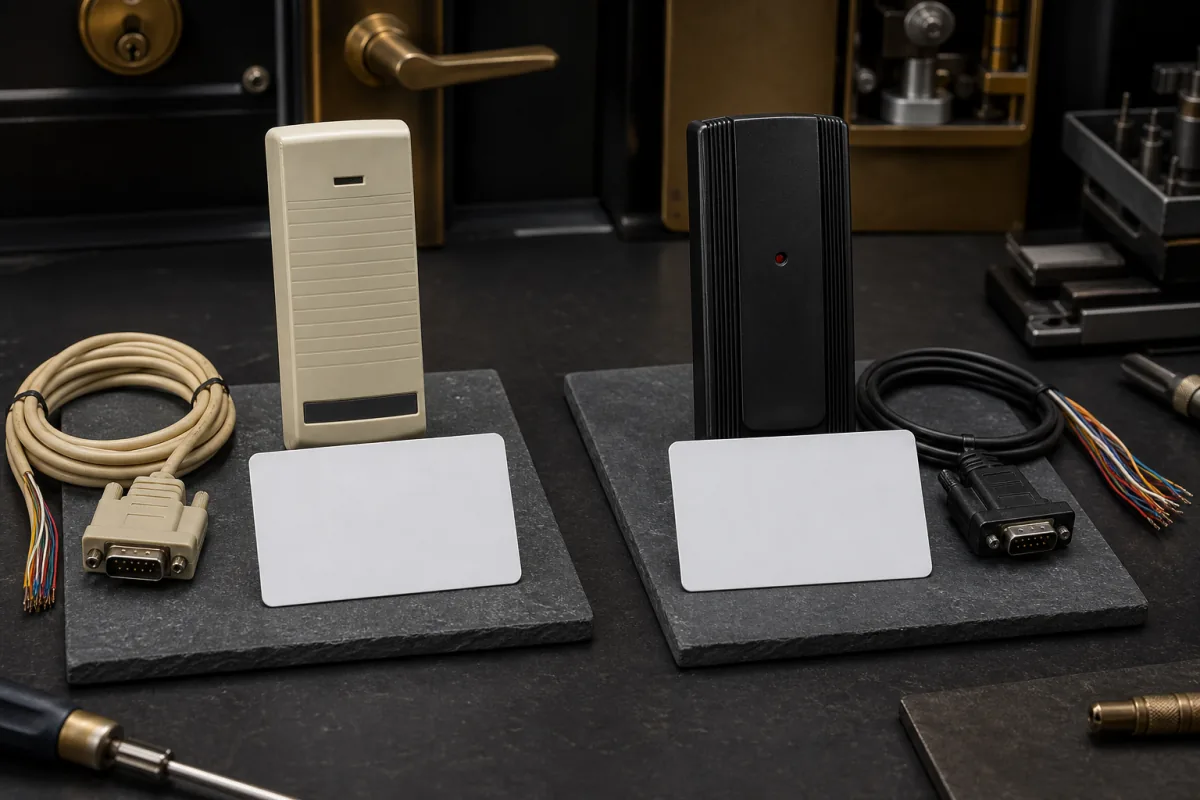
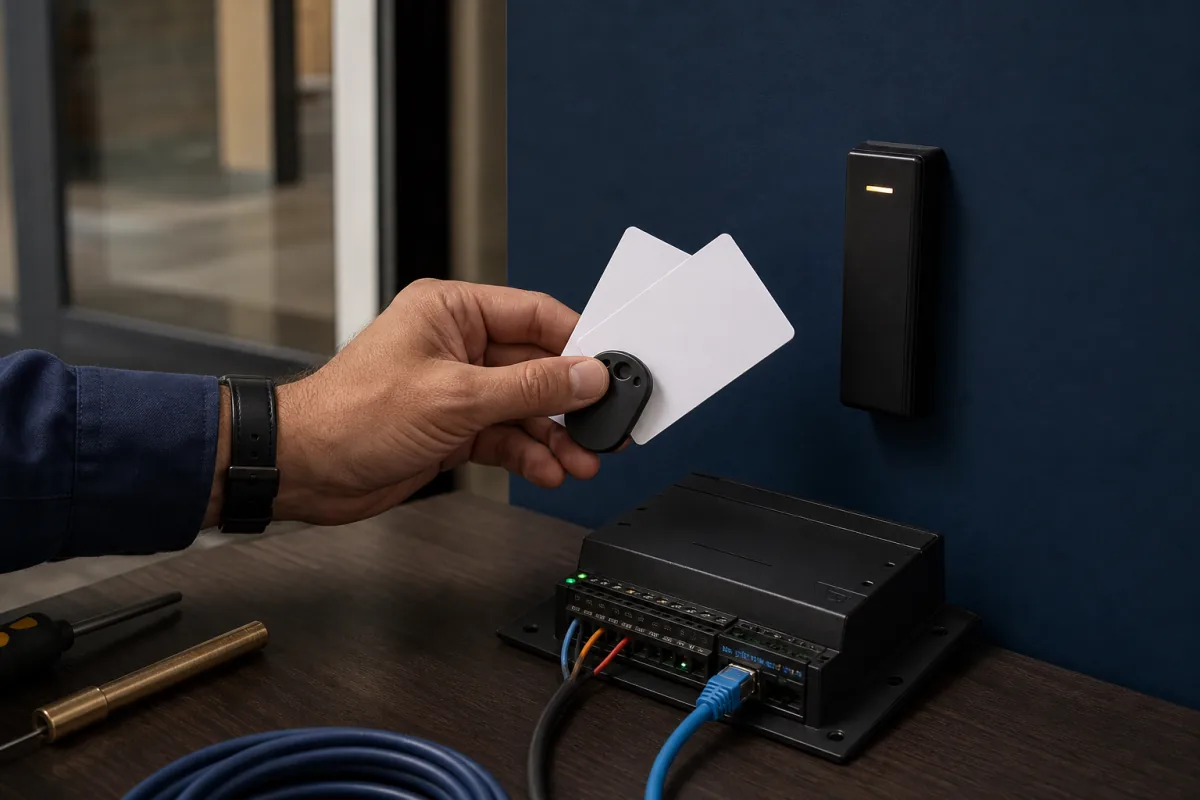
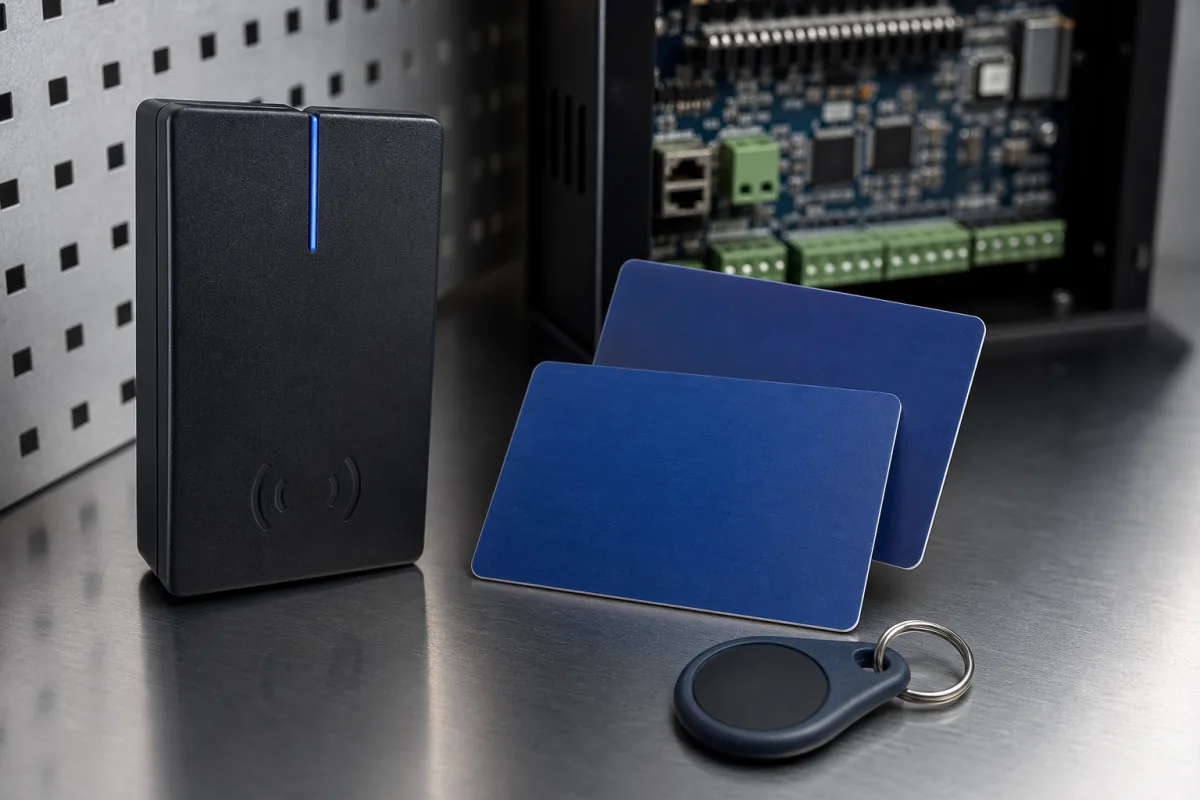
If your access control system uses Keri MicroStar readers and a PXL-500P Tiger controller, your cards use the Keri MS format — a proprietary 125 kHz protocol with almost no aftermarket presence. American Key Cards supplies compatible Keri MS-format clamshell cards and key tags programmed to your credential data, giving property managers and facility operators a direct supply path outside the Keri dealer channel.
What Is the Keri MS Format?
The Keri MS format, also called MicroStar format, is a proprietary 125 kHz proximity credential protocol developed by Keri Systems for use with their MicroStar reader line and PXL-500P Tiger access control controllers. Plenty of these systems are still running in North American commercial buildings, yet almost no supplier stocks the credential — a gap that leaves facilities managers stranded when a card is lost and the original dealer is long gone.
Unlike open formats such as HID H10301 26-bit Wiegand, the Keri MS format has a proprietary bit structure that Keri has not published publicly. This is distinct from formats like standard 26-bit Wiegand, which are openly documented and produced by dozens of manufacturers. Because the MS format is tied exclusively to Keri’s MicroStar reader family and PXL-500P controller, most generic proximity card suppliers cannot program it.
The full Keri MS format technical page on this site covers the encoding in more detail. The short version for buyers: if your reader says “MS-3000,” “MS-5000,” or similar, you need MS-format cards, not standard 26-bit cards. If you are not certain the MicroStar line is what you have, our Keri MS vs. Keri 26-bit comparison shows how to tell the two proximity generations apart in under two minutes.
OEM Part Numbers for Keri MS Cards
Keri sells MS-format credentials under four main part numbers, all using the same underlying 125 kHz MS-protocol encoding:
| OEM Part Number | Form Factor | Notes |
|---|---|---|
KC-10X | Standard proximity card | Most common MS-format card in the field |
MT-10X | ISO-size proximity card | Credit-card dimensions, standard PVC |
MT-10XP | ISO printable card | Printable surface for photo ID or branding |
PKT-10X | Packet-style card | Variant form factor, same MS encoding |
All four are compatible with the same Keri MicroStar readers and PXL-500P controllers. The difference between them is physical form factor and printability, not the encoding. American Key Cards supplies compatible replacements for KC-10X and MT-10X as the primary card formats, and key fob equivalents for installations requiring a tag rather than a card.
Which Readers Use the Keri MS Format?
The MS format is exclusive to the Keri MicroStar reader family. If you see any of the following on your door panels, your system requires MS-format credentials:
- Keri MS-3000 — standard mullion-mount proximity reader
- Keri MS-5000 — single-gang wall-plate proximity reader
- Keri MS-7000 — extended-range proximity reader (for wider read distance)
- Keri MS-4000 — vandal-resistant proximity reader
These readers are designed to connect to the Keri PXL-500P Tiger or PXL-500W Tiger controller. The controller-reader combination forms a closed system: MS-format cards work only with MicroStar readers, and MicroStar readers only decode MS-format cards.
This is an important distinction from the Keri 26-bit product line. Keri also makes readers that accept standard Wiegand 26-bit credentials — those readers carry different model designations (P-series, not MS-series). See our comparison guide on Keri MS vs. Keri 26-bit formats to confirm which system you have before ordering.
How Keri MS Differs From Keri NXT
While both are Keri-proprietary formats, the MS and NXT lines serve different controller generations and have different security profiles.
| Property | Keri MS (MicroStar) | Keri NXT (NetXtreme) |
|---|---|---|
| Frequency | 125 kHz | 125 kHz |
| Controller | PXL-500P / PXL-500W Tiger | NXT-series controllers |
| Bit structure | Proprietary MS format | Proprietary encrypted NXT format |
| Cloneable | Yes (with correct tools) | No (encrypted protocol) |
| Aftermarket supply | Limited — AKC supplies compatible | Limited — AKC supplies compatible |
| Readers | MS-3000, MS-5000, MS-7000 | NXT-1R, NXT-3R, NXT-5R |
The Keri NXT format uses a 96-bit encrypted card-to-reader protocol that cannot be trivially cloned and requires factory-programmed compatible credentials — those are not the same as MS-format cards. Our Keri NXT compatible cards guide covers that system. If your controller is a PXL-500P and your readers carry MS model numbers, you are in MS territory.
Can Keri MS Cards Be Cloned?
Yes. The Keri MS format operates at 125 kHz with no cryptographic layer. Although Keri has kept the bit-structure specification confidential, the protocol has been analyzed by the RFID security research community, and MS-format credentials can be reproduced using tools such as the Proxmark3 with the appropriate firmware.
This is consistent with the security profile of all 125 kHz passive proximity formats of the same era. The MS format is suitable for commercial access control in buildings where the primary concern is managing authorized entry — not defending against a well-resourced attacker with specialized RFID equipment. For environments requiring cryptographic credential security, Keri’s NXT and MIFARE-based credentials are more appropriate choices.
The practical consequence for facilities managers is useful: because the MS format can be reproduced from known credential data, an authorized supplier with the correct programming capability can produce compatible replacement cards without needing to physically copy an existing card. That is the mechanism by which American Key Cards supplies compatible MS-format credentials.
How to Identify Your Credential Data
Before ordering replacement Keri MS cards, you need the credential information currently programmed into your cards. Unlike standard 26-bit Wiegand cards, where facility code and card number are always printed on the card label, Keri MS-format cards may not display this information in a readable format.
Here are the practical ways to retrieve your credential data:
- Check existing cards. Some MS-format cards have the encoded data printed on the back label or in a code on the face.
- Review installer documentation. The original system installer or Keri dealer would have documented the credential range when the system was commissioned.
- Pull from the access control software. The PXL-500P Tiger controller software stores enrolled credential records, including the programmed card numbers.
- Read an existing working card. An RFID reader tool with Keri MS support can extract the encoded data from a working card.
If you have working cards but cannot retrieve the credential data by other means, contact us before ordering — we can advise on the best path for your specific situation.
Why Keri MS Cards Are Hard to Source
The Keri MS format creates a supply problem that is different from most other proprietary access control formats. The issue is not simply dealer-channel gatekeeping — it is that programming Keri MS credentials requires either OEM programming equipment from Keri Systems or a reverse-engineered implementation of the MS protocol that very few suppliers have developed.
By comparison, a format like DoorKing DKProx (AWID 26-bit) is hard to source because DoorKing distributes only through dealers — but the AWID protocol itself is well-documented and programmable by any supplier with AWID-compatible encoding tools. Keri MS is harder: the protocol specification is not public, which means the barrier to producing compatible cards is higher and the number of capable aftermarket suppliers is correspondingly smaller.
American Key Cards is among the limited group of non-OEM suppliers that can program Keri MS-format credentials. We are not affiliated with Keri Systems and produce compatible cards by specification — meaning our cards encode to the same MS-protocol structure, operate at the same 125 kHz frequency, and produce the same credential output to the PXL-500P Tiger controller as OEM cards.
What to Prepare Before Ordering
When you contact us to order Keri MS-format replacement cards, have the following ready:
- The card data or credential range currently programmed in your system (from labels, software, or card reads)
- The reader models on your doors (to confirm MS-series vs. other Keri reader types)
- The controller type (PXL-500P, PXL-500W, or another model)
- The quantity and form factor needed — clamshell cards, ISO cards, or key tags
- Any printing or sequential numbering requirements for the card face
Because the Keri MS format is proprietary, we will confirm compatibility with your specific system before programming begins.
What “Compatible” Means for Non-OEM Keri MS Cards
“Compatible by specification” means our Keri MS-format cards are encoded to the same 125 kHz MS protocol that Keri MicroStar readers decode. They are not OEM Keri cards and are not affiliated with Keri Systems — they are aftermarket credentials produced to the same technical specification.
For most facilities, the practical result is identical: the card presents at the reader, the PXL-500P Tiger controller recognizes the credential, and entry is granted or denied exactly as it would be with an OEM KC-10X card. The system does not distinguish between an OEM-branded card body and a compatible card body — it reads the encoded data.
The cost difference between OEM and compatible credentials is typically meaningful, particularly for larger replacement batches. And for facilities that have lost contact with their original Keri dealer or cannot navigate the dealer-only ordering process, a direct-buy compatible card supplier removes a genuine operational barrier.
Ready to Order Keri MS-Compatible Cards?
If your building has Keri MicroStar readers connected to a PXL-500P Tiger controller, American Key Cards can supply compatible MS-format clamshell cards and key tags programmed to your credential data. We also cover the standard-prox side of Keri’s lineup in our Keri Proximite PSC-1 buyer’s guide, and the encrypted 13.56 MHz option in the Keri MIFARE DK4/DC4 guide, for facilities running mixed Keri infrastructure.
Contact us with your system details and credential information to request a quote or discuss your replacement program.
Frequently asked questions
What readers use the Keri MS format?
Keri MS format is used exclusively with the Keri MicroStar reader family — the MS-3000 mullion reader, MS-5000 single-gang reader, MS-7000 extended-range reader, and MS-4000 vandal-resistant reader. These readers are connected to a Keri PXL-500P or PXL-500W Tiger controller. Standard Wiegand readers from other manufacturers will not accept MS-format cards.
Can Keri MS cards be cloned or copied?
The Keri MS format operates at 125 kHz without cryptographic protection. Although the bit structure is proprietary and not publicly documented, the protocol has been reverse-engineered in the security research community, and cloning is possible with tools such as the Proxmark3. Compatible replacement cards can be produced from known credential data, which is the basis for aftermarket supply from companies like American Key Cards.
What OEM part numbers does the Keri MS format cover?
The primary Keri MS format OEM part numbers are KC-10X (standard proximity card), MT-10X (ISO card), PKT-10X (packet-style card), and MT-10XP (printable ISO card). All four use the same MS proprietary 125 kHz encoding and are compatible with the same MicroStar readers and PXL-500P controller.
How do I confirm my system uses Keri MS format rather than Keri 26-bit?
Check your reader model number. Readers labeled MS-3000, MS-5000, MS-7000, or MS-4000 use the MS proprietary format. Readers labeled P-710H, P-900H, or similar alpha-numeric Wiegand designations use standard 26-bit Wiegand. The controller is also a reliable indicator: a PXL-500P or PXL-500W Tiger controller connected to MS-series readers confirms MS format.