
Compact form factor
Adhesive RFID tags
Peel-and-stick RFID tags for phones, credentials, devices and asset-adjacent access applications. Tag performance depends on the reader technology, the mounting surface and nearby metal, so every tag is specified against its intended installation.
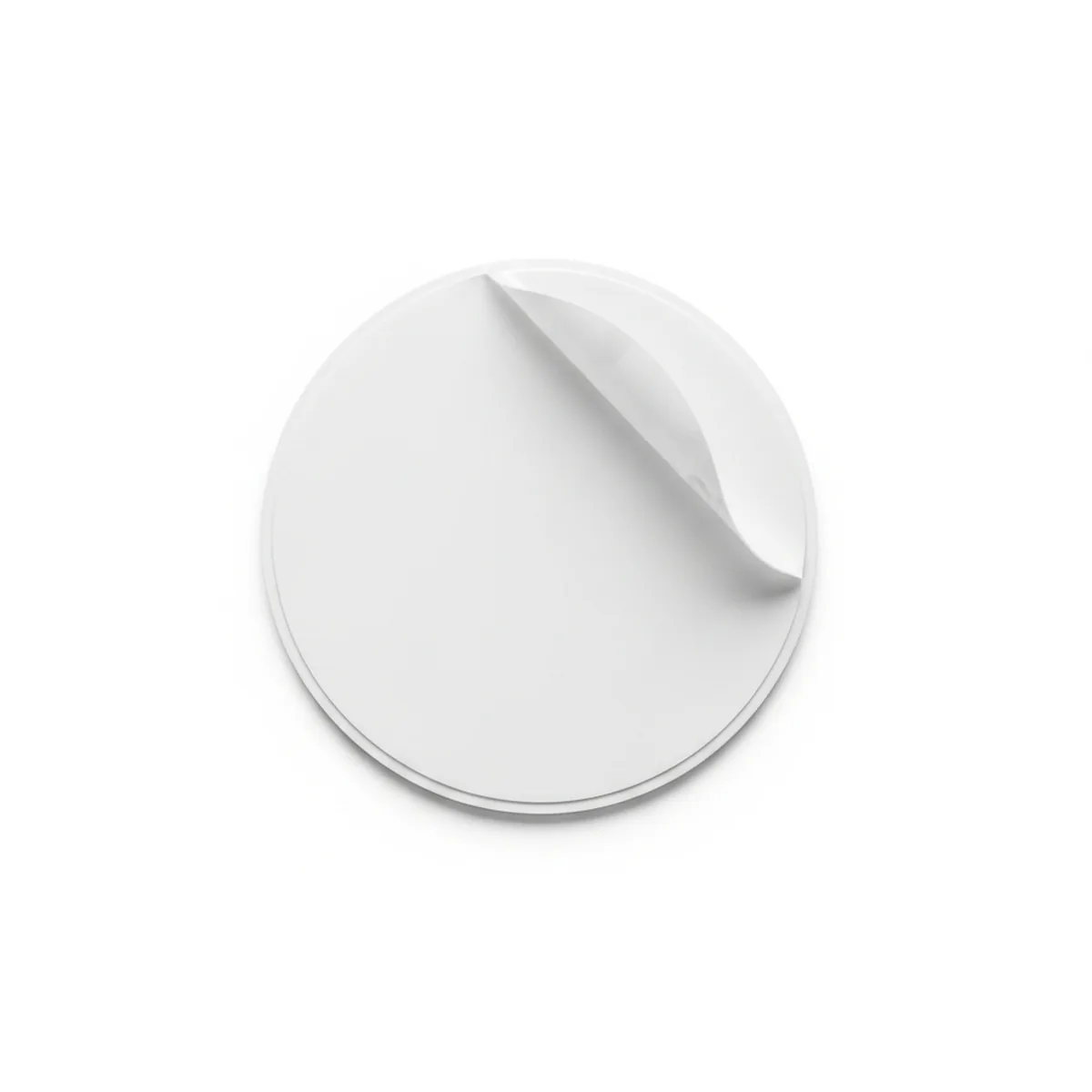
The inlay and encoding depend on the installed reader, the surface or environment, and your use case.
What are adhesive RFID tags?
Adhesive RFID tags are peel-and-stick discs and thin wafers carrying a 125 kHz or 13.56 MHz chip in your access system’s format, turning a phone case, badge back or device into an enrollable credential. Read range is somewhat shorter than a full card because the antenna is smaller, and metal surfaces need a shielded construction. American Key Cards verifies the reader format and mounting surface before producing any batch.
Overview
About Adhesive RFID tags
The most requested credential of the last five years is not a card — it is "can my phone open the door without an app?" The adhesive RFID tag answers it: a thin disc or wafer carrying the same chip as your access cards, stuck to a phone case, badge back or device, enrolling in your system like any other credential. No batteries, no Bluetooth, no IT project.
Performance lives and dies on placement. RFID antennas detune near metal, and modern phones are mostly metal — which is why our tags are specified against both your reader format and the mounting surface, with on-metal constructions where the installation demands them. We ask the placement question up front instead of refunding boxes later.
Technical details
Adhesive RFID tags specifications
- Frequency
- 125 kHz or 13.56 MHz, by selected inlay
- Form factors
- Adhesive discs and thin wafers
- Adhesive
- Permanent pressure-sensitive backing
- Mounting
- Reader and surface dependent — metal reduces range without a shielded construction
- Typical read range
- Shorter than a full card of the same technology (smaller antenna)
- Use cases
- Phones, devices and compact credentials
- Requirement
- Metal and placement review before production
Available configuration
Choose the form factor after the technology
Where it fits
Common Adhesive RFID tags applications
Phone-as-credential programs
Discs on phone cases for tenants and staff who will never carry a fob but are never without a phone.
Consolidating multiple badges
A tag on the back of an existing photo ID adds a second system’s credential without a second card.
Equipment & device access
Wafers on laptops, carts and shared tools that unlock cabinets, elevators or charging stations.
Retrofit credentials on anything
Water bottles, badge reels, motorcycle helmets — if a user reliably carries it, it can carry the credential.
Before you order
How to order Adhesive RFID tags correctly
- Metal placement needs on-metal tags
A standard tag flat against a metal phone back reads at essentially zero range. On-metal versions with a ferrite layer restore performance; case-mounted placement avoids the issue entirely.
- Format-matched like any credential
The sticker is a housing; inside is a specific chip in your system’s format — 125 kHz proximity, 13.56 MHz smart card and others. Reader verification comes first, always.
- Adhesive is permanent-ish
The industrial-grade adhesive survives daily handling but is not designed for repeated transfers. Plan for a tag per user per device, not a migrating sticker.
Questions we actually get
Adhesive RFID tags FAQ
Will a sticker on my phone really open the door?
Yes — presented to the reader like a card, at a somewhat shorter range given the compact antenna. On phones with wireless charging, place the tag away from the charging coil area.
Does wireless charging harm the tag?
Chargers can heat a tag sitting directly over the coil. Positioning the tag off-center or on a case avoids this; we include placement guidance with phone-bound orders.
Can I move the tag to a new phone later?
Removal usually survives, re-sticking often does not — adhesives are single-bond by design. Order spares with the batch; per-unit costs are low precisely for this reason.
What formats do adhesive tags come in?
Most of our credential families: standard 125 kHz proximity, common low-frequency formats, industrial 125 kHz transponders and 13.56 MHz smart cards. If your reader reads cards we supply, a tag version almost certainly exists.
Need help identifying the technology?
Send a photo of the credential and the reader model. We'll identify the format before we quote a compatible product.
Lifetime parts & workmanship guarantee on every card