
Contact credentials
Microprocessor smart cards
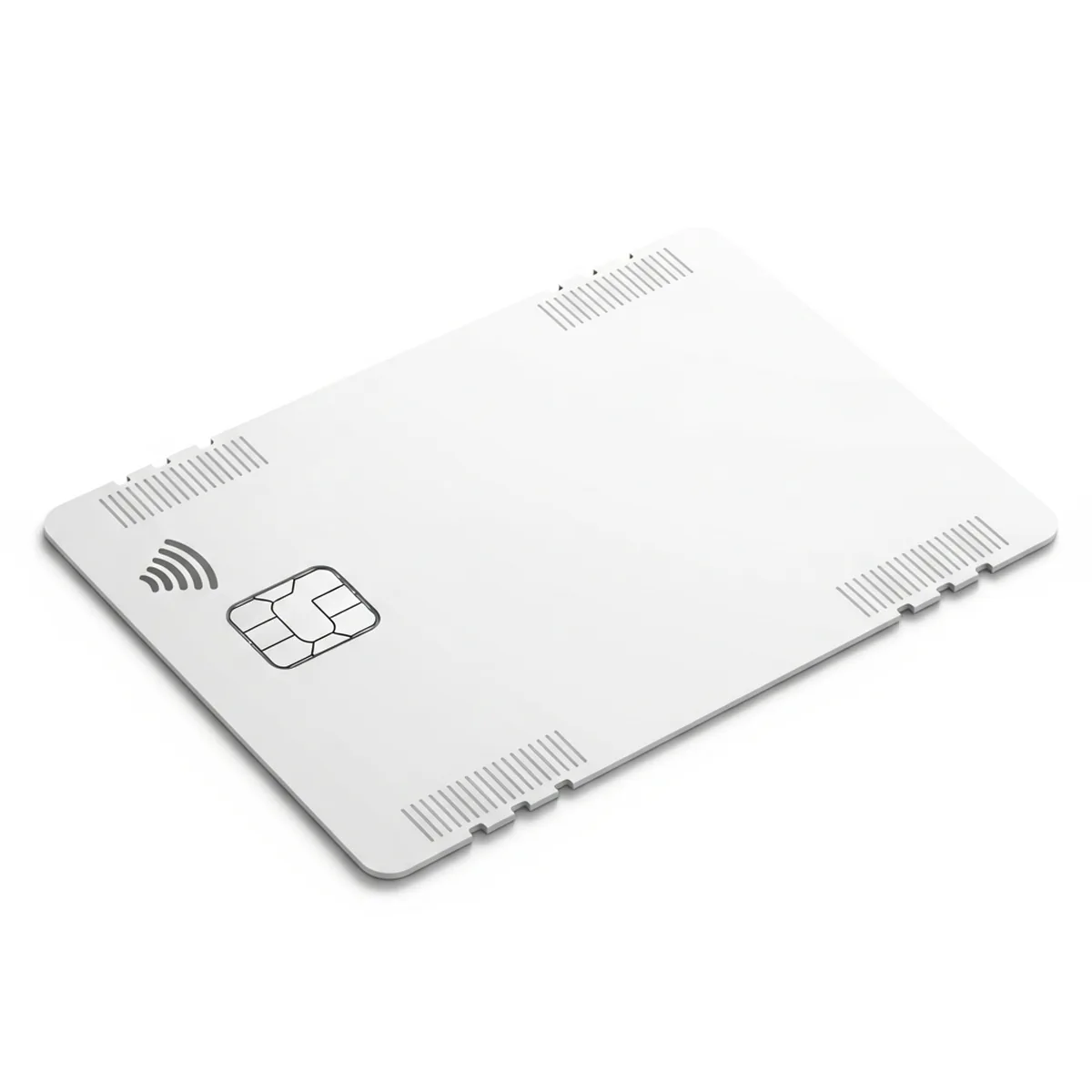
Secure microcontroller (applet-based) smart cards for PKI login, digital signing, OTP and converged physical + logical access badges. Includes dual-interface and combination builds that pair the secure element with a 13.56 MHz smart card or 125 kHz prox layer so one badge opens the door and logs into the workstation.
The inlay and encoding depend on the installed reader, the surface or environment, and your use case.
What is a microprocessor smart card?
A microprocessor smart card runs a secure operating system that performs RSA, ECC and AES cryptography on the chip itself, so private keys never leave the silicon. It is the card behind PKI login, digital signing and OTP badges. American Key Cards supplies contact, dual-interface and combination builds that add a 13.56 MHz smart-card or 125 kHz prox layer for door access, scoping middleware and reader requirements before quoting.
Overview
About Microprocessor cards
A memory card stores data; a microprocessor card computes — running a secure operating system that performs cryptography on-chip, so private keys never leave the silicon. This is the card class behind enterprise PKI badges, smart-card login, digital signatures and one-time-password tokens, built on applet-based secure microcontrollers with the certifications security teams ask about.
The configuration enterprises increasingly want is convergence: one badge that opens the door and logs into the workstation. We supply microprocessor cards in pure contact builds, dual-interface builds, and combination builds that add a 13.56 MHz smart-card or 125 kHz prox layer for the physical-access half — with the honest caveat that card stock is the easy 20% of a PKI project, and we scope the middleware and reader questions with you before quoting.
Technical details
Microprocessor smart cards specifications
- Interfaces
- ISO/IEC 7816 contact (T=0 / T=1); dual-interface ISO 14443 options
- Platform class
- Applet-based secure microcontrollers
- Cryptography
- On-chip RSA, ECC and AES for PKI, signing and OTP
- Combinations
- Optional 13.56 MHz smart-card or 125 kHz prox layer for door access
- Card dimensions
- CR80 ISO/IEC 7810 ID-1 — 85.6 × 54 mm, 30 mil / 0.76 mm
- Printing
- Dye-sub direct-to-card printable for photo-ID badges
- Use cases
- PKI login, digital signature, OTP, converged badges
- Requirement
- Middleware, certificate profile and reader mix confirmed before quoting
Available configuration
Choose the form factor after the technology
Where it fits
Common Microprocessor cards applications
Enterprise PKI & smart-card login
Certificate-bearing badges for desktop smart-card logon, VPN authentication and S/MIME email signing.
Converged physical + logical access
One card body carrying a secure element for IT plus a prox or 13.56 MHz smart-card layer for the doors HR already controls.
Digital signature programs
Qualified-signature-style deployments where signing keys must live in certified hardware.
Development & pilot programs
Small secure-element batches for teams building or evaluating applet-based solutions before committing to volume.
Before you order
How to order Microprocessor cards correctly
- Middleware decides more than the chip
Your PKI stack — certificate authority, credential-management software, OS minidrivers — dictates which card platforms actually work. We match stock to that reality, not the other way around.
- Contact, dual-interface or combi
Pure contact suits desk-bound login; dual-interface adds tap convenience; combi cards bolt on a separate prox or 13.56 MHz smart-card layer when the door system is a different generation from the IT system.
- Applet loading and key ceremonies
Someone must load applets and initialize keys — your team, your integrator or a personalization bureau. Settle custody before ordering a thousand blank secure elements.
Questions we actually get
Microprocessor cards FAQ
Will these work for desktop smart-card login?
The card platform supports it; the working system also needs your CA, middleware and driver configuration in agreement. We confirm your stack’s supported platforms before recommending specific stock.
Can one card really do doors and computers?
Yes — combination builds carry a secure microcontroller for logical access alongside a 13.56 MHz smart-card or prox layer for physical access. The two systems stay independent; the employee carries one card.
What is an applet-based secure microcontroller card, in one paragraph?
A standardized secure operating system for smart cards that runs small signed applications ("applets") — identity, OTP, signing — on tamper-resistant silicon. It is why one physical card can serve multiple security functions.
We just need door access — is this overkill?
Completely. This product exists for cryptographic identity and login use cases. For doors alone, our encrypted smart cards and format-matched credentials do the job at a fraction of the complexity.
Need help identifying the technology?
Send a photo of the credential and the reader model. We'll identify the format before we quote a compatible product.
Lifetime parts & workmanship guarantee on every card