Gym Access Card Replacement: A Fitness Center Buyer's Guide
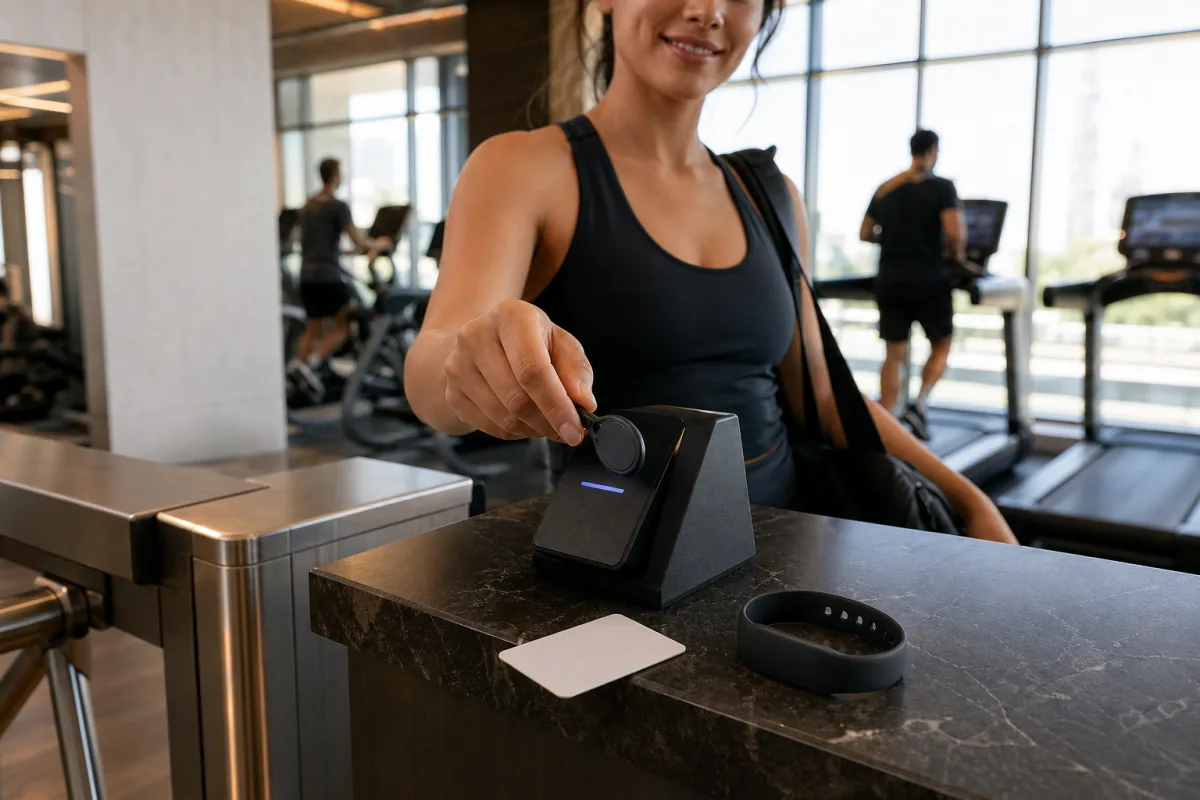
Gyms and fitness centers replace access credentials at a rate that most other facilities never approach. Between member churn, lost key fobs left in jacket pockets, and the physical toll of sweat and daily handling, a mid-size fitness club can burn through hundreds of credentials a year. American Key Cards supplies compatible replacement cards and key fobs for the most common gym access formats—programmed to your specification, shipped directly, with no OEM dealer account required.
Why Fitness Centers Have High Credential Turnover
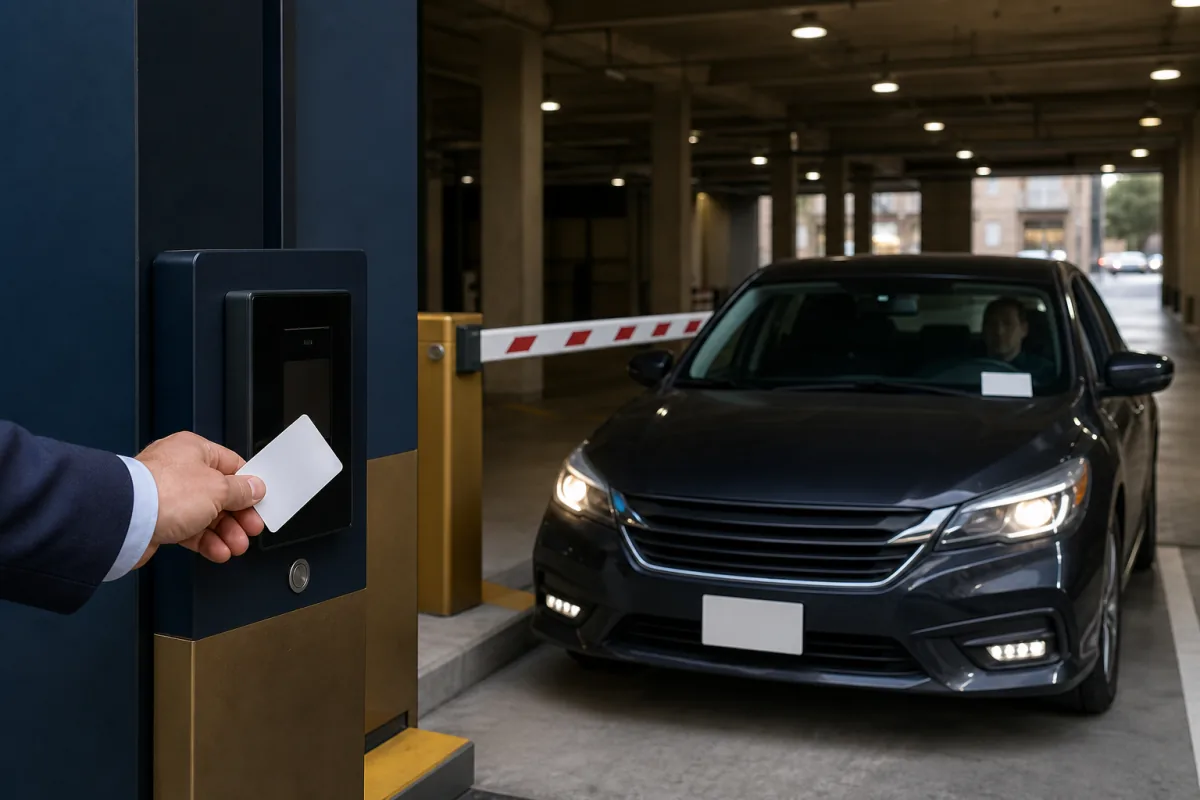
An office building might replace a handful of cards a month. A fitness center with 800 active members can replace that many in a quarter. The reorder pressure is closer to what a parking garage access system faces than a quiet commercial office, where credentials sit on a lanyard for years. Several factors drive the churn:
Member attrition. Cards are rarely returned when members cancel. The active credential pool grows with every new enrollment and shrinks only when cards are manually deactivated.
Physical wear. Key fobs live on keyrings exposed to sweat and heat. Antenna coils delaminate faster in humid environments than in climate-controlled offices, causing read failures as credentials age.
Lost credentials. A member who loses a fob cannot wait a week for an OEM reorder. Gyms with a stock of pre-programmed replacements can hand one over at the front desk the same day.
The Three Most Common Gym Access Formats
Standard 26-Bit Proximity (H10301)
Standard 26-bit Wiegand proximity—format code H10301—is the most widely deployed access card format in North America, and fitness centers are no exception. If your readers came from a mainstream access control line, there is a strong probability your system uses standard H10301-encoded credentials.
The 26-bit format encodes an 8-bit facility code (values 0–255) and a 16-bit card number (values 0–65,535) in a Wiegand data frame transmitted at 125 kHz. These credentials are available as aftermarket-compatible cards from American Key Cards at a fraction of OEM distributor pricing.
Security note: Standard 26-bit proximity cards carry no encryption and can be reproduced with commercially available tools. For a fitness center, this is generally an acceptable trade-off—the consequence of a cloned credential is an unauthorized gym visit, not a high-consequence security breach. Facilities requiring stronger protection should evaluate a secure or encrypted 13.56 MHz smart card.
EM4100 (125 kHz Read-Only)
The EM4100 chip is one of the oldest and most widely manufactured RFID credentials in the world. It operates at 125 kHz, uses ASK/Manchester encoding, and transmits a factory-programmed 64-bit unique ID. It contains no writeable memory and carries no encryption.
EM4100-based readers are extremely common in budget and mid-range fitness club access systems, particularly in standalone door controllers. If your reader came bundled with a basic access control kit and carries no prominent branding, there is a high probability it speaks EM4100.
Unlike 26-bit Wiegand systems, EM4100 credentials do not use a facility code and card number pair. Each card has a unique 64-bit ID enrolled individually into the access control software. You cannot pre-program a sequential batch the way you can with 26-bit credentials—each ID is captured at enrollment. AKC supplies EM4100-compatible clamshell cards and key tags with unique IDs ready for enrollment.
Security note: EM4100 transmits an unencrypted fixed ID that can be captured and cloned in seconds with a Proxmark3 or basic handheld duplicator. For a fitness center, this is typically acceptable. For facilities that handle high-value member data or share an access system with a co-located business requiring stricter control, consider upgrading to a 13.56 MHz smart card format.
Standard 13.56 MHz Smart Card
A standard 13.56 MHz smart card operates per the ISO 14443A standard and stores about 1,024 bytes of data in 16 sectors secured by a proprietary stream cipher. Some gym management platforms and CRM-integrated access systems use one because the card can store both an access credential and membership data—member number, class entitlements, or visit counters—in separate sectors.
Compatible 13.56 MHz smart cards from American Key Cards follow the same specification and work with any ISO 14443A reader that supports the format.
Security note: The stream cipher on the standard 13.56 MHz smart card is cryptographically broken. Academic attacks (nested, darkside, MFOC) recover all 16 sector keys within minutes, and commercially available magic-UID writable blank cards allow full sector-for-sector duplication. The standard 13.56 MHz smart card is not suitable for deployments where clone resistance is a security requirement. It remains serviceable for fitness center environments where the risk profile is low, but new installations should evaluate a secure 13.56 MHz smart card for a meaningful security upgrade. A secure 13.56 MHz smart card configured at its highest security level uses AES-128 and is not reproducible by third parties—replacement cards for those systems must be obtained through the system integrator or platform vendor.
Formats That Cannot Be Third-Party Supplied
Two formats appearing in some premium fitness environments are genuinely beyond what any aftermarket supplier can produce:
Encrypted 13.56 MHz smart cards. These operate at 13.56 MHz with AES-encrypted, digitally signed credential data. The cryptographic keys are held by the platform and never exposed—no third party can produce compatible credentials. Replacements must come through the platform’s own issuance channel.
Secure 13.56 MHz smart cards at their highest security level. When one of these cards is provisioned for full security, all authentication uses AES-128. Without the site-specific AES keys, a third-party card cannot be programmed to match. These credentials must be ordered through the integrator who holds the site key.
If your gym uses either of these formats, American Key Cards cannot supply a compatible replacement. Any supplier who claims otherwise is not being honest. Our reference on which access cards cannot be cloned lays out exactly which encrypted credentials sit permanently outside the aftermarket.
Format Comparison Table
| Format | Frequency | Structure | Cloneable | AKC Compatible |
|---|---|---|---|---|
| Standard 26-bit (H10301) | 125 kHz | 26-bit Wiegand | Yes | Yes |
| EM4100 read-only | 125 kHz | 64-bit unique ID | Yes | Yes |
| Standard 13.56 MHz smart card | 13.56 MHz | Legacy cipher (16 sectors) | Yes | Yes |
| Secure 13.56 MHz smart card (highest security level) | 13.56 MHz | AES-128 | No | No |
| Encrypted 13.56 MHz smart card | 13.56 MHz | AES mutual authentication | No | No |
How to Identify Your Gym’s Access Format
Check the reader. Most readers have a brand name or model number on the housing. A reader that came as part of a mainstream access control system almost always means H10301 or a related 125 kHz format. A generic-looking reader without prominent branding suggests EM4100 or a budget 13.56 MHz platform.
Look at your existing cards or fobs. Many cards print a facility code and card number directly on the card body. EM4100 credentials are rarely labeled with the chip name—check the reader’s documentation instead.
Check your access control software. The panel’s admin interface will typically show what format the system was initialized with, as well as enrolled facility codes for Wiegand systems.
Contact your installer. The original installation documentation includes the reader model and any programming notes. If you no longer have that paperwork, the reader model number is usually enough.
If you are unsure after checking these sources, contact American Key Cards with the reader brand and model number. We can usually confirm the correct format before you place an order.
What “Compatible by Specification” Means
American Key Cards is not affiliated with any reader or chip manufacturer. Our cards are compatible by specification—programmed to the same frequency, encoding protocol, bit structure, and (where applicable) facility code as the original OEM credential. An AKC H10301-format card reads identically to an OEM 26-bit card in your existing readers. An AKC EM4100 key tag enrolls exactly like a factory-made EM4100 card. An AKC 13.56 MHz smart card follows the same ISO 14443A specification.
What this does not mean: we cannot supply formats that require site-specific AES keys we do not hold. See our product range for the credentials we can supply, and our cloning reference for an honest explanation of why third-party encrypted smart cards cannot be produced.
Ordering Strategy for Fitness Centers
Keep a stock on hand. The most operationally efficient approach for a fitness center is to maintain a small inventory of pre-programmed replacement credentials. For H10301 systems, order a batch with sequential card numbers beyond your current active range. For EM4100 systems, order unassigned key tags in bulk—enroll each one as you issue it.
Order by batch, not by incident. Ordering one card at a time is expensive in both shipping cost and management time. A batch of 25 to 100 credentials covers typical quarterly turnover at most mid-size gyms and qualifies for volume pricing.
Label your card numbers. For Wiegand systems, keep a log of which card numbers are assigned to which members. This makes deactivation clean and prevents card number conflicts when you reorder.
Confirm your facility code before ordering. Every card in a 26-bit batch must carry the same facility code—do not estimate it. Our walkthrough on how to find your facility code covers reading it from an existing card or your access panel, and if you are not yet sure which credential your readers use, how to identify your access card format is the place to start.
Why Non-OEM Gym Access Cards Cost Less
A gym’s economics make the dealer markup sting more than most: you are not replacing one badge a year, you are cycling through hundreds, and every one bought through an installer at OEM-channel pricing multiplies the same margin across the whole active pool. Because the common gym formats — 26-bit H10301, EM4100, the standard 13.56 MHz smart card — are open specifications, an AKC card matches frequency, encoding, and facility code without any affiliated-brand licensing baked into the unit cost. Buy a batch of pre-programmed replacements and the front desk hands one over the same day instead of the member waiting on an installer reorder.
For detailed specs and reader compatibility across every format we support, see our full product range.
If you manage a gym or fitness center and need compatible access cards or fobs without waiting on an installer or dealer, contact American Key Cards. Provide your reader brand and model, your facility code (if applicable), and the quantity you need. We will confirm compatibility, quote the order, and ship programmed credentials directly to you.
Frequently asked questions
What access card formats do gyms most commonly use?
Most fitness centers run on one of three formats: standard 26-bit proximity (H10301), EM4100 125 kHz read-only cards, or a standard 13.56 MHz smart card. The exact format depends on which access control panel and reader was installed. Check the reader housing for a model number—that is usually enough to identify the format.
Can I order gym access cards without going through my access control installer?
Yes, for open 125 kHz proximity formats such as standard 26-bit (H10301) and EM4100. American Key Cards supplies compatible cards and fobs directly, programmed to your facility code, with no dealer account required. Standard 13.56 MHz smart cards are also available as pre-programmed blanks. Encrypted 13.56 MHz smart cards cannot be reproduced by third parties.
How quickly do gym access credentials wear out?
Fitness centers have unusually high credential turnover compared to office buildings. Member attrition, lost fobs, and physical wear from moisture and daily handling means many gyms replace 20 to 40 percent of their active credential pool each year. Keeping a stock of pre-programmed replacement cards on hand is the most practical way to manage this.
Do gym access cards need to be programmed to a specific facility code?
For 26-bit (H10301) and similar Wiegand formats, yes. Each card must carry your facility code (sometimes called a site code) and an assigned card number so it matches what your access panel expects. EM4100 cards use a fixed 64-bit unique ID instead of a facility code; the ID is enrolled individually into the system. Contact us with your reader model and we can confirm exactly what your system requires.