Parking Garage Access Card & Fob Replacement Guide
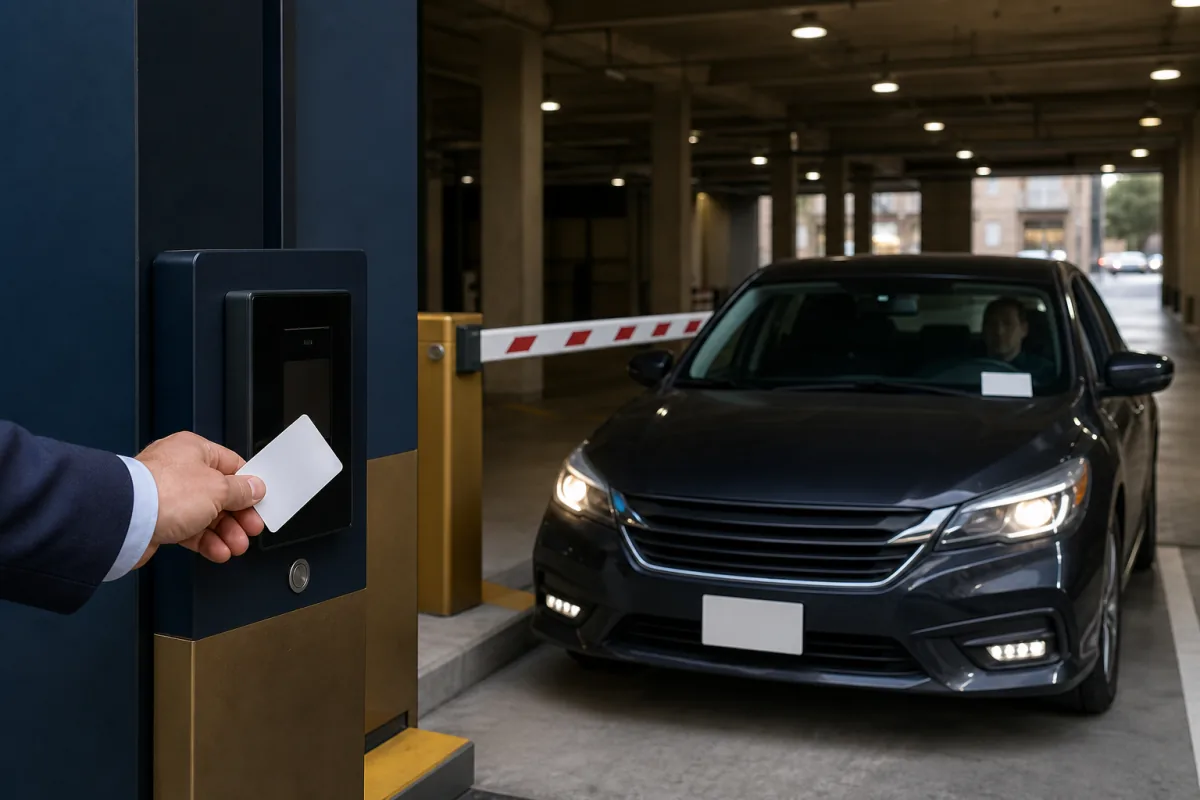
Parking garage operators and property managers responsible for monthly parker programs can order replacement access cards and key fobs directly—without a dealer account, without minimum-quantity OEM orders, and without waiting on a parking management company’s procurement cycle. The most common parking garage formats are open 125 kHz proximity credentials: standard 26-bit, distinct-air-interface 125 kHz proximity, and proprietary formats with 26-bit and 32-bit Wiegand variants. American Key Cards supplies compatible cards and fobs for all of them, programmed to your facility code and ready to enroll in your access panel.
Why Parking Garage Card Replacement Is Complicated
Parking facilities are among the highest-turnover credential environments in commercial access control. Monthly parkers leave, new tenants onboard, cards get lost in cars or damaged by moisture, and fobs disappear constantly. That steady churn means parking operators and building managers are perpetually reordering small batches of credentials.
The problem is distribution. Parking access systems are installed by contractors who source credentials through their own dealer relationships. Once the installation is complete, the property manager inherits a single reorder path: call the contractor, wait for a quote, and pay the markup.
The underlying technology in most parking systems is unencrypted 125 kHz proximity—an open format available from aftermarket suppliers at a fraction of OEM pricing. The perceived lock-in is a distribution arrangement, not a technical barrier.
The Most Common Parking Garage Access Formats
125 kHz Proximity With a Distinct Air Interface
The most widely installed parking-gate credential family uses a 125 kHz proximity format with a distinct card-to-reader air interface—one that is not the most common protocol. This is the single most important detail in parking card replacement, and the one that trips up most buyers.
Here is the trap: two 125 kHz cards can look identical and both send 26-bit Wiegand data to the access panel, yet one will not read on the other’s reader. That is because the RF encoding layer between the card and the reader is different, even though the data delivered to the panel is the same 26-bit Wiegand frame. A card built for the common protocol will not be read by a reader expecting the distinct-air-interface protocol—this is the most common ordering mistake in parking card replacement.
American Key Cards supplies compatible clamshell cards and key fobs in this format, programmed to your facility code (0–255) and card number range (0–65,535). If you can read the model number off your reader housing, we can confirm which air interface it uses before you order. See our full product range for the credentials we supply.
Standard 26-Bit Proximity (H10301)
Many commercial parking garages use common-protocol 125 kHz proximity readers as part of larger access control systems that also manage building entry, elevator access, and tenant credential programs. In these installations, the same credentials used for building access work in the parking garage.
Standard 26-bit Wiegand is the most widely deployed access card format in North America. The format encodes a facility code (0–255) and card number (0–65,535) in a 26-bit H10301 data frame. Compatible cards from AKC are drop-in replacements for any standard 26-bit reader installation.
Proprietary 125 kHz Formats (26-Bit and 32-Bit Variants)
Some mid-market commercial parking installations run a proprietary 125 kHz format with two Wiegand variants:
- 26-bit variant: facility codes 0–255, card numbers 0–65,535
- 32-bit variant: an expanded facility code range
Some of these readers are dual-technology and also accept standard 26-bit credentials, so a single installation can sometimes read either format.
American Key Cards supplies compatible credentials in the 26-bit variant programmed to your facility code. Confirm your reader’s variant from the housing markings or your access software before ordering.
Parking Garage Format Comparison
| Format | Frequency | Structure | Cloneable | AKC Compatible |
|---|---|---|---|---|
| Standard 26-bit (H10301) | 125 kHz | 26-bit Wiegand | Yes | Yes |
| 125 kHz proximity (distinct air interface) | 125 kHz | 26-bit Wiegand output | Yes | Yes |
| Proprietary 125 kHz (26-bit variant) | 125 kHz | 26-bit Wiegand | Yes | Yes |
| Proprietary 125 kHz (32-bit variant) | 125 kHz | 32-bit Wiegand | Yes | Yes |
| Encrypted 13.56 MHz smart card | 13.56 MHz | AES mutual authentication | No | No |
The Honest Version of Parking Card Cloneability and Security
Every 125 kHz format covered in this guide is an unencrypted proximity credential with no cryptographic protection. The facility code and card number can be reproduced on a blank T5577 chip with commercially available RFID tools. This applies equally to OEM credentials and aftermarket ones—it is a characteristic of the technology, not a flaw in aftermarket sourcing.
For most parking applications this is an acceptable risk: the goal is ensuring only authorized vehicles enter, not defending against sophisticated RFID attack scenarios. If your facility requires encrypted smart credentials, an encrypted 13.56 MHz smart card (AES-128) is significantly more resistant to duplication—but those formats cannot be sourced from any third-party supplier and require re-enrollment through the OEM’s platform.
AKC supplies newly manufactured, freshly programmed compatible credentials. Our cards are not copies of existing cards—they are new cards programmed to your facility code and the card number range you specify.
How to Identify Your Parking System’s Card Format
Step 1 — Read the reader housing. The proximity reader mounted at your entry lane or gate has the brand name and model number visible. That model number is the fastest way for us to tell you which air interface and format the reader expects.
Step 2 — Check your existing cards. OEM parking credentials usually print a facility code and card number on the card body. The facility code is typically labeled “FC,” “Site Code,” or “S/C” on the card face; a printed format designation on the card can also identify the variant.
Step 3 — Look in the access panel software. The controller managing your parking system stores the facility code and card format in its configuration. This is also where you can see the full list of enrolled card numbers, which is useful before ordering a new batch. If the facility code is not obvious, our guide to finding your facility code covers every method.
Step 4 — Check installation documentation. The original installer should have left as-built documentation that includes the card format and facility code. Property managers often find this in the building’s electrical or security drawings.
If you cannot identify the format from these steps, contact American Key Cards with the reader model number and any details from existing cards. We can identify the format from the reader model in most cases.
Ordering for Monthly Parker Programs
Monthly parker programs have predictable demand: new parkers onboard, existing parkers lose cards or fobs, and batches of credentials are needed throughout the year. Three practical considerations:
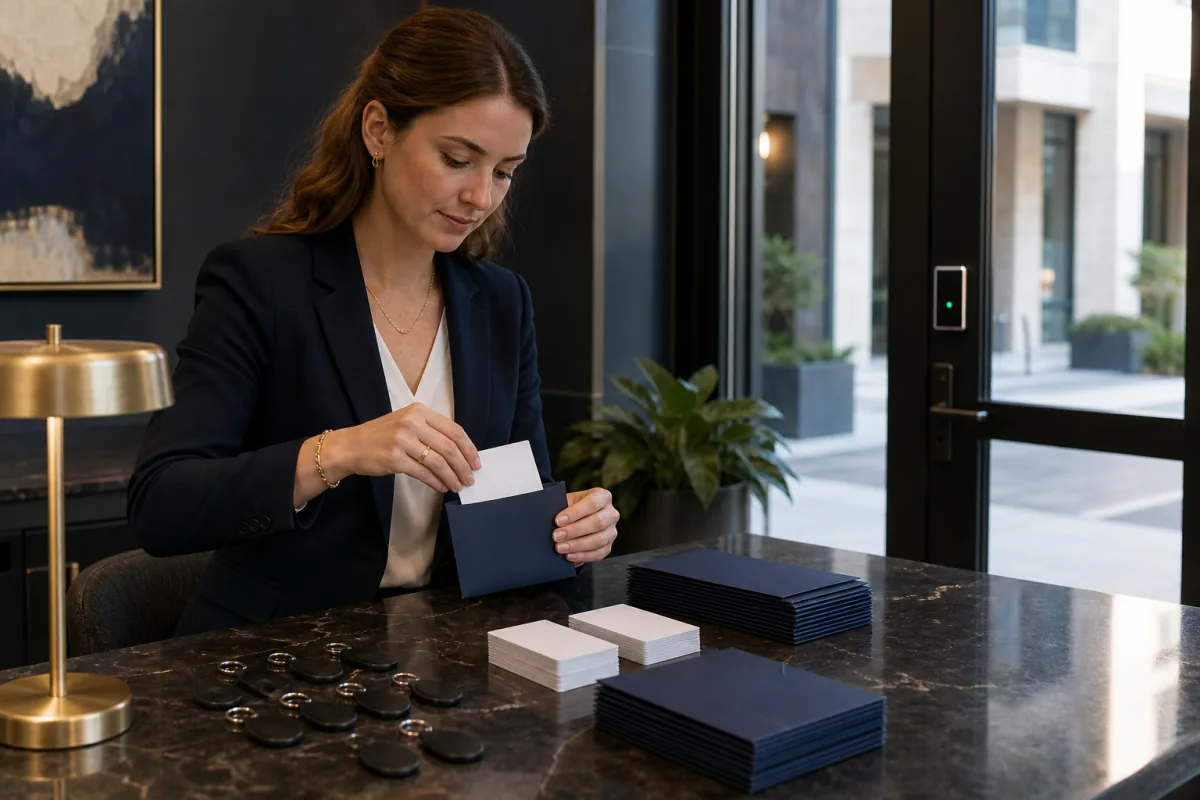
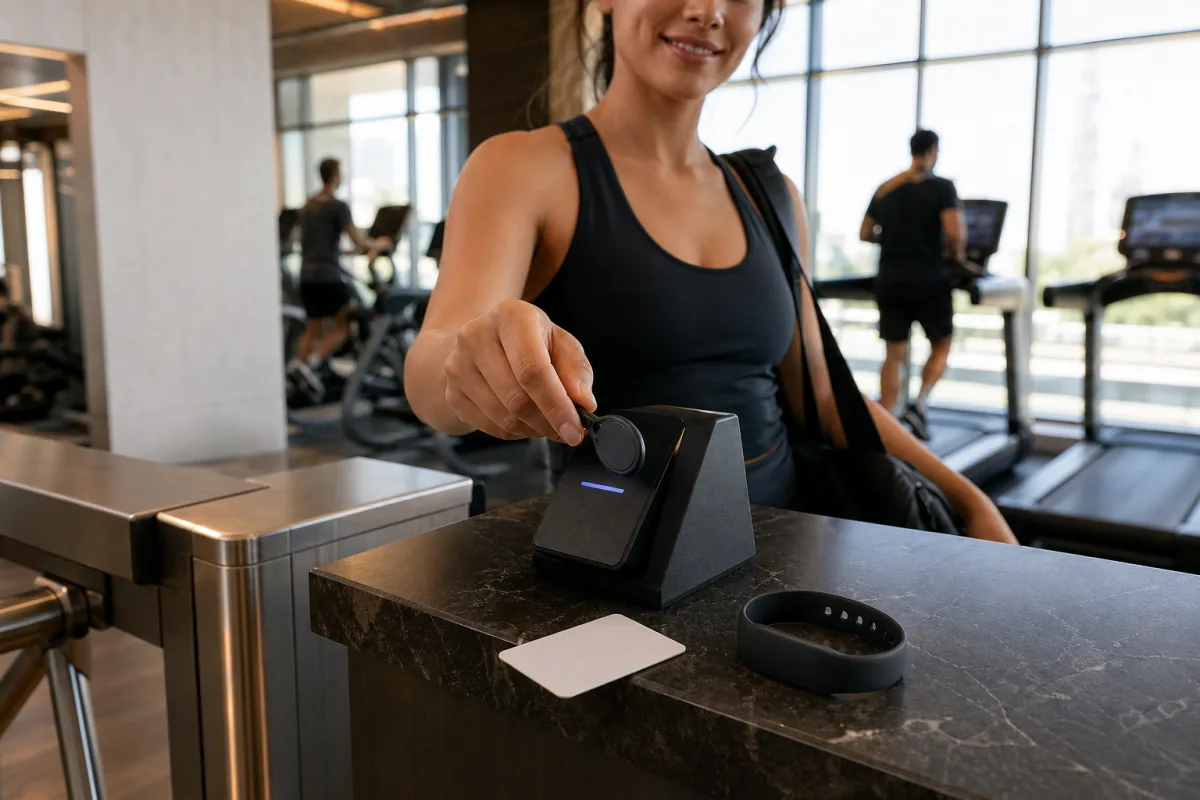
Clamshell cards vs. key fobs. Clamshell cards work well for parkers presenting credentials through a car window. Key fobs are preferred when the credential also serves building entry. AKC supplies both form factors across all supported formats.
Card number sequencing. Order new batches with card numbers that continue sequentially from your last issued number rather than reusing revoked card numbers. This prevents any possibility of access overlap in the panel database.
Bulk pricing. Per-unit cost drops at higher quantities. If your facility issues 30–50 credentials per month, a quarterly pre-order batch is more economical than small repeat orders.
Why Compatible Cards Cost Less Than OEM
American Key Cards is not affiliated with any parking system, reader, or chip manufacturer. Our products are compatible by specification: same 125 kHz frequency, same air-interface protocol, same Wiegand output format, programmed to the same facility code and card numbers. When a monthly parker waves our card at your reader, the reader decodes it and lifts the gate—exactly as it does with an OEM card.
Parking is a high-churn environment, so the markup compounds. Every lost fob replaced through the gate contractor carries the OEM price plus the contractor’s handling fee, and a garage cycling 30 or 40 credentials a month feels that on every reorder. Buying compatible cards direct removes the contractor from the loop entirely: you order the exact quantity you need, at a per-unit price set by the chip and the programming rather than by the brand printed on the card.
Ready to Order
Parking operators and property managers can contact American Key Cards directly with their reader model, facility code, quantity, and preferred form factor. We confirm the correct format, provide a quote, program credentials to your specification, and ship ready-to-enroll cards and fobs. No dealer account, no minimum order requirements beyond a practical production minimum, and no waiting on a contractor to place the order on your behalf.
Frequently asked questions
What access card format do most parking garage systems use?
The most common parking garage credential formats are standard 26-bit proximity (H10301), a distinct-air-interface 125 kHz proximity format, and proprietary 125 kHz formats with 26-bit and 32-bit Wiegand variants. Your format depends entirely on the reader brand and model installed at the entry lane or barrier gate. The reader housing almost always shows the brand name, which is the fastest way to confirm what you need.
Can I order replacement parking garage cards without going through the parking operator or a dealer?
Yes, if your system uses an open 125 kHz proximity format. American Key Cards programs compatible clamshell cards and key fobs to your facility code and ships directly—no dealer account required. Encrypted 13.56 MHz smart credentials cannot be sourced from any aftermarket supplier.
What information do I need to order replacement parking access cards?
You need your reader brand and model (printed on the reader housing at the gate), your facility code (also called site code), and the card number range you want programmed. The facility code is typically printed on existing cards, stored in the access panel software, or available from the original installer's records. If you are unsure, contact us with the reader model number and we can help identify the correct format.
Are parking garage proximity cards and fobs cloneable?
Standard 125 kHz parking credentials carry no encryption and can be duplicated with commercially available RFID tools. This is a factual property of the underlying technology. Encrypted 13.56 MHz smart credentials cannot be cloned and cannot be supplied by any third-party vendor. AKC supplies newly programmed compatible cards, not copies of existing cards.